You are using an out of date browser. It may not display this or other websites correctly.
You should upgrade or use an alternative browser.
You should upgrade or use an alternative browser.
2004 Buick Park Avenue Ultra Alternator Amp rating
- Thread author jcampbell
- Start date

HotZ28
Full Member Since 2005
- Joined
- Jul 1, 2005
- Messages
- 11,307
- Reaction score
- 2,524
- Points
- 113
- Location
- SE
- Buick Ownership
- 1996 Roadmaster Limited Collectors Edition 58k - 1996 PAU 2019 Regal GS
The SPID (RPO) sticker located on the spare tire cover should have one of the following codes to identify the alternator amp rating.
KG7 : GENERATOR, 125 AMP
KG8 : GENERATOR, 130 AMP
KG9 : GENERATOR, 140 AMP
KG7 : GENERATOR, 125 AMP
KG8 : GENERATOR, 130 AMP
KG9 : GENERATOR, 140 AMP

BuickGirlFromMars
SUPER STAR!
- Joined
- Oct 8, 2018
- Messages
- 7,961
- Reaction score
- 2,771
- Points
- 113
- Buick Ownership
- 1999 Buick Park Avenue Ultra (Supercharged) , 1977 Buick Electra Limited (350 SBB)
Di
AD244 werent put on 3800 to my knowledge. This requires some deep dive study!
Did late year park avenues HAVE a KG9 option? Thats impressive if so.The SPID (RPO) sticker located on the spare tire cover should have one of the following codes to identify the alternator amp rating.
KG7 : GENERATOR, 125 AMP
KG8 : GENERATOR, 130 AMP
KG9 : GENERATOR, 140 AMP
AD244 werent put on 3800 to my knowledge. This requires some deep dive study!
jcampbell
Member
- Joined
- Feb 11, 2019
- Messages
- 77
- Reaction score
- 26
- Points
- 18
- Buick Ownership
- 2004 Ultra
I'll just go by rpo codeDi
Did late year park avenues HAVE a KG9 option? Thats impressive if so.
AD244 werent put on 3800 to my knowledge. This requires some deep dive study!
BuickGirlFromMars
SUPER STAR!
- Joined
- Oct 8, 2018
- Messages
- 7,961
- Reaction score
- 2,771
- Points
- 113
- Buick Ownership
- 1999 Buick Park Avenue Ultra (Supercharged) , 1977 Buick Electra Limited (350 SBB)
Okay, I went and found the answers. A 2004/2005 Buick Park Avenue could have a KG9 on the SPID label, found under the cover for the spare tire, SPID standing for Service Parts Identification Label,
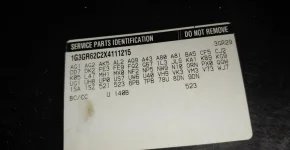
heres an example.
This car says KG9, huh. thats my 1999 Auroras. COOL. Anyway, not the point.
In a park Avenue, a KG9 would be a Japanese manufactured alternator, NOT a Delphi AD series alternator. You can easily get a Delphi Alternator of 140 amps if you wish, its an easy swap you just need a longer belt and a bracket which I can link.
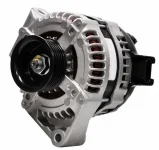
The alternator if you had it looks like this
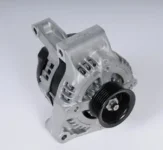
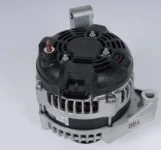
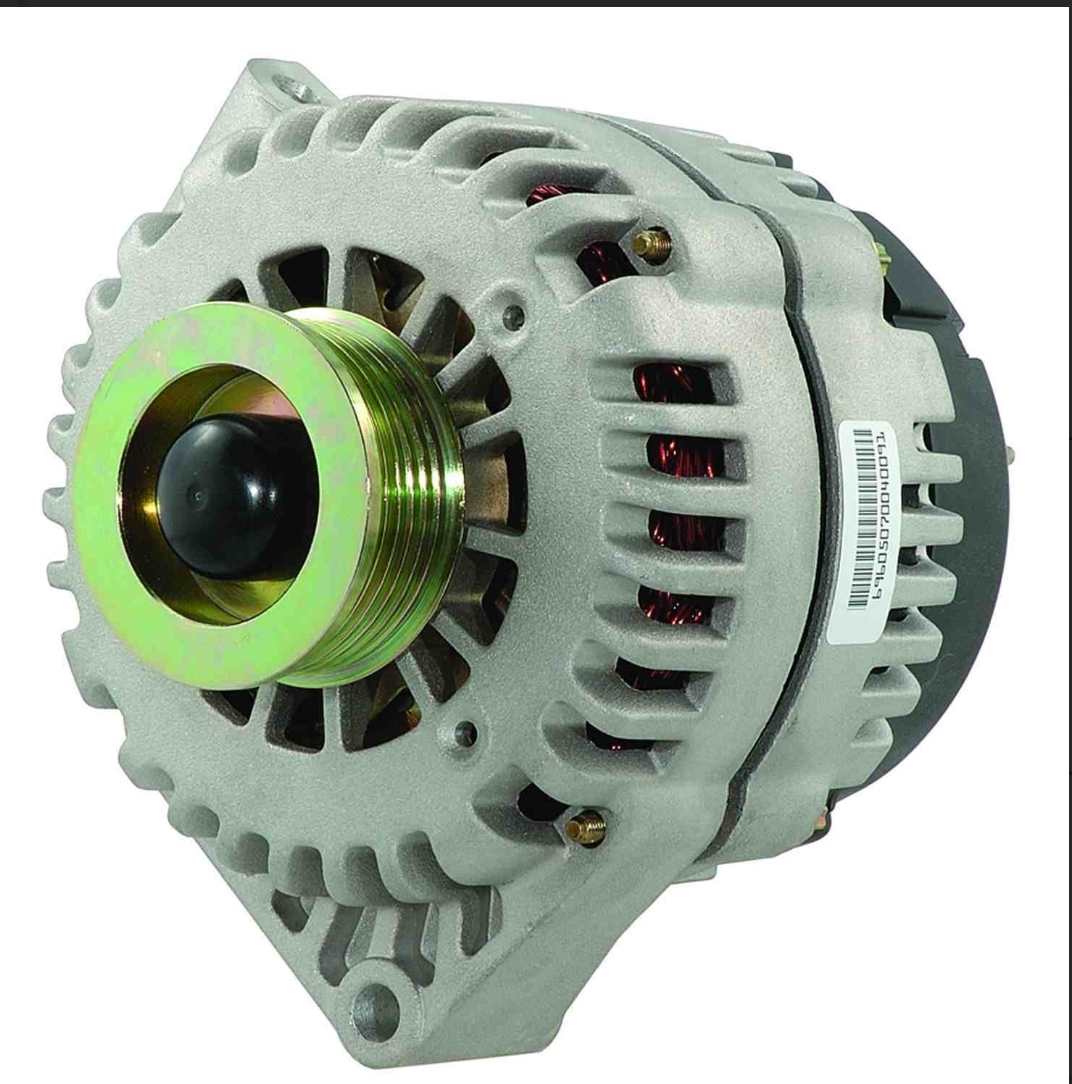
The AD series alternator looks like these (105amps or 125 amps):
heres an example.
This car says KG9, huh. thats my 1999 Auroras. COOL. Anyway, not the point.
In a park Avenue, a KG9 would be a Japanese manufactured alternator, NOT a Delphi AD series alternator. You can easily get a Delphi Alternator of 140 amps if you wish, its an easy swap you just need a longer belt and a bracket which I can link.
The alternator if you had it looks like this
The AD series alternator looks like these (105amps or 125 amps):
BuickGirlFromMars
SUPER STAR!
- Joined
- Oct 8, 2018
- Messages
- 7,961
- Reaction score
- 2,771
- Points
- 113
- Buick Ownership
- 1999 Buick Park Avenue Ultra (Supercharged) , 1977 Buick Electra Limited (350 SBB)
An Ultra should have eithr a AD237 or a Nippendoso(I spelled that wrong) model that I showed before.I'll just go by rpo code
heres the Japanese alternator, 140 amp, if needed:
Part# 334-2858 - ACDelco
Part# 19343570 - GM
OEM: 25758345
This is what an AD237 looks like:
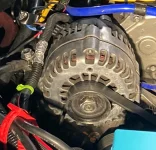
thats my original AD237 on my 1999. A 2004 may, if it has it, look different, but if it says Delphi on the front case you have An AD, if it doesnt, it may be the other. Pic of yours?
An ultra SHOULD have one or the other, so that should help reduce the possibility of fitment issue. The Japanese alt appears ot have the same mounting ears as the AD237 so you shouldnt have a problem there.
HotZ28
Full Member Since 2005
- Joined
- Jul 1, 2005
- Messages
- 11,307
- Reaction score
- 2,524
- Points
- 113
- Location
- SE
- Buick Ownership
- 1996 Roadmaster Limited Collectors Edition 58k - 1996 PAU 2019 Regal GS
Just trying to help about any confusion here, replace the alternator with the one listed for the year/car based on the RPO code. Where it was manufactured has no bearing!
BuickGirlFromMars
SUPER STAR!
- Joined
- Oct 8, 2018
- Messages
- 7,961
- Reaction score
- 2,771
- Points
- 113
- Buick Ownership
- 1999 Buick Park Avenue Ultra (Supercharged) , 1977 Buick Electra Limited (350 SBB)
in his case, where it was manufactured correlates to what RPO/what it had.Just trying to help about any confusion here, replace the alternator with the one listed for the year/car based on the RPO code. Where it was manufactured has no bearing!
The connector is the same, the mounting is the same. The only logical choice is the factory one esp if 140 amp because why would you downgrade to 105 or 125.
If he had the 140
Part# 334-2858 - ACDelco
Part# 19343570 - GM
OEM: 25758345
were the part numbers for a new replacement 🙂
BuickGirlFromMars
SUPER STAR!
- Joined
- Oct 8, 2018
- Messages
- 7,961
- Reaction score
- 2,771
- Points
- 113
- Buick Ownership
- 1999 Buick Park Avenue Ultra (Supercharged) , 1977 Buick Electra Limited (350 SBB)
that sounds normalIt's 6 degrees today. Not gonna check it until it gets a tad warmer. It currently is cranking 13.5 volts so maybe it is ok.
what made you think there is an issue?
jcampbell
Member
- Joined
- Feb 11, 2019
- Messages
- 77
- Reaction score
- 26
- Points
- 18
- Buick Ownership
- 2004 Ultra
Yesterday is was at 10.4 on the freeway. I think maybe the great defrost was on.that sounds normal
what made you think there is an issue?
jcampbell
Member
- Joined
- Feb 11, 2019
- Messages
- 77
- Reaction score
- 26
- Points
- 18
- Buick Ownership
- 2004 Ultra
Rear defog, I meant to say. It stayed on for 20 minutes, which it usually doesn't. I thought that had a timer.Yesterday is was at 10.4 on the freeway. I think maybe the great defrost was on.
BuickGirlFromMars
SUPER STAR!
- Joined
- Oct 8, 2018
- Messages
- 7,961
- Reaction score
- 2,771
- Points
- 113
- Buick Ownership
- 1999 Buick Park Avenue Ultra (Supercharged) , 1977 Buick Electra Limited (350 SBB)
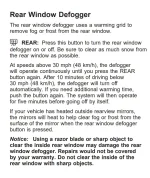
==============================================================================
==============================================================================
==============================================================================
The only important part of the above is that your car will turn off loads like the defog if it needs to to keep the battery charged. The BCM controls the stuff above.
What is your mileage? if your car isnt super high mileage or there is reason to believe your alt may be ok, You may just need to clean battery cable, fuse box, alternator connections, and also clean the mounting base and case of the alternator where they mate to ensure a good ground. I would check the ground from engine to battery, engine to chasiss, and chasiss to battery as well. When warm of course. If you are ehigh mileage, it may just be a worn alternator. however your intermittent reported behavior is something a failing alt can do BUT usually thats temp related not so much "are we working today"
==============================================================================
Electrical Load Management
The power management function is designed to monitor the vehicle electrical load and determine when the battery is potentially in a high discharge condition. This is accomplished by using a high accuracy battery voltage reading as an indicator of battery discharge rate. The following six levels of load management will execute in the load management control algorithm when there is a high discharge condition:- The first action requests a vehicle idle speed increase to the powertrain control module (PCM) in order to raise alternator output.
- The second action requests a greater vehicle idle speed increase to the PCM in order to raise alternator output.
- The third action begins to shed vehicle loads in an attempt to remedy the heavy discharge condition.
- The fourth action requests another vehicle idle speed increase to the PCM in order to raise further the alternator output.
- The fifth action begins to shed further vehicle loads in an attempt to remedy the heavy discharge condition.
- If the above five corrective actions fail, the sixth action of power management further sheds loads in a final attempt to remedy the high discharge condition.
- The A/C clutch
- The heated mirrors
- The heated seats
- The rear defog
- The HVAC blowers
==============================================================================
The only important part of the above is that your car will turn off loads like the defog if it needs to to keep the battery charged. The BCM controls the stuff above.
What is your mileage? if your car isnt super high mileage or there is reason to believe your alt may be ok, You may just need to clean battery cable, fuse box, alternator connections, and also clean the mounting base and case of the alternator where they mate to ensure a good ground. I would check the ground from engine to battery, engine to chasiss, and chasiss to battery as well. When warm of course. If you are ehigh mileage, it may just be a worn alternator. however your intermittent reported behavior is something a failing alt can do BUT usually thats temp related not so much "are we working today"
jcampbell
Member
- Joined
- Feb 11, 2019
- Messages
- 77
- Reaction score
- 26
- Points
- 18
- Buick Ownership
- 2004 Ultra
Great info. 216,000 miles. New battery. But of course, poor grounds could cause this. I did not know about the "above 30 mph" thing. I shut off the defog and charge voltage went from 11 to 13.5 almost immediately.==============================================================================View attachment 35446
==============================================================================
Electrical Load Management
The power management function is designed to monitor the vehicle electrical load and determine when the battery is potentially in a high discharge condition. This is accomplished by using a high accuracy battery voltage reading as an indicator of battery discharge rate. The following six levels of load management will execute in the load management control algorithm when there is a high discharge condition:
Loads subject to reduction include the following:
- The first action requests a vehicle idle speed increase to the powertrain control module (PCM) in order to raise alternator output.
- The second action requests a greater vehicle idle speed increase to the PCM in order to raise alternator output.
- The third action begins to shed vehicle loads in an attempt to remedy the heavy discharge condition.
- The fourth action requests another vehicle idle speed increase to the PCM in order to raise further the alternator output.
- The fifth action begins to shed further vehicle loads in an attempt to remedy the heavy discharge condition.
- If the above five corrective actions fail, the sixth action of power management further sheds loads in a final attempt to remedy the high discharge condition.
- The A/C clutch
- The heated mirrors
- The heated seats
- The rear defog
- The HVAC blowers
==============================================================================
The only important part of the above is that your car will turn off loads like the defog if it needs to to keep the battery charged. The BCM controls the stuff above.
What is your mileage? if your car isnt super high mileage or there is reason to believe your alt may be ok, You may just need to clean battery cable, fuse box, alternator connections, and also clean the mounting base and case of the alternator where they mate to ensure a good ground. I would check the ground from engine to battery, engine to chasiss, and chasiss to battery as well. When warm of course. If you are ehigh mileage, it may just be a worn alternator. however your intermittent reported behavior is something a failing alt can do BUT usually thats temp related not so much "are we working today"
BuickGirlFromMars
SUPER STAR!
- Joined
- Oct 8, 2018
- Messages
- 7,961
- Reaction score
- 2,771
- Points
- 113
- Buick Ownership
- 1999 Buick Park Avenue Ultra (Supercharged) , 1977 Buick Electra Limited (350 SBB)
That tells me you either have an excessive draw on your defog grid, grounds are poor, power connections are poor, OR alternator is struggling to keep up.Great info. 216,000 miles. New battery. But of course, poor grounds could cause this. I did not know about the "above 30 mph" thing. I shut off the defog and charge voltage went from 11 to 13.5 almost immediately.
Is your rear defogger had the module replaced at all? Or is it original? They are a common fail part. if yours is on the brink of dying i could see it drawing a lot of amps potentially through resistance.
jcampbell
Member
- Joined
- Feb 11, 2019
- Messages
- 77
- Reaction score
- 26
- Points
- 18
- Buick Ownership
- 2004 Ultra
I've replaced that module twice because it also feeds the antenna to the radio. Not hard to do.That tells me you either have an excessive draw on your defog grid, grounds are poor, power connections are poor, OR alternator is struggling to keep up.
Is your rear defogger had the module replaced at all? Or is it original? They are a common fail part. if yours is on the brink of dying i could see it drawing a lot of amps potentially through resistance.
BuickGirlFromMars
SUPER STAR!
- Joined
- Oct 8, 2018
- Messages
- 7,961
- Reaction score
- 2,771
- Points
- 113
- Buick Ownership
- 1999 Buick Park Avenue Ultra (Supercharged) , 1977 Buick Electra Limited (350 SBB)
did you do the wiring connector to it for the defogger? the purple wires iircI've replaced that module twice because it also feeds the antenna to the radio. Not hard to do.
jcampbell
Member
- Joined
- Feb 11, 2019
- Messages
- 77
- Reaction score
- 26
- Points
- 18
- Buick Ownership
- 2004 Ultra
I had to. It melted the connectordid you do the wiring connector to it for the defogger? the purple wires iirc
BuickGirlFromMars
SUPER STAR!
- Joined
- Oct 8, 2018
- Messages
- 7,961
- Reaction score
- 2,771
- Points
- 113
- Buick Ownership
- 1999 Buick Park Avenue Ultra (Supercharged) , 1977 Buick Electra Limited (350 SBB)
Then unless yours has a wiring repair issue its unlikely the problem. I vote cable connections grounds 🙂I had to. It melted the connector
additionally, you could get a cable to ground the case of the alternator either in place of the cleaning the contact spot or additionally(never hurts to have more grounds for that) and put it in an appropiate spot, you could possibly determine if it requires digging into or replacement or to look elsewhere. just an idea.

Lui
Member
- Joined
- Sep 6, 2020
- Messages
- 72
- Reaction score
- 40
- Points
- 18
- Location
- Germany
- Buick Ownership
- 1999 Park Avenue running on LPG (propane)
I upgraded my worn out 125A alternator to a 150A Nippondenso:
It is a direct fit, same mounting as the 125 original alternator.
The main connection of the alternator was the same as the old one.
The connector for the control is in a slightly different place, but the cable is just long enough.
I have laid additional 35mm2 (AWG 2 ?) cables for plus 12V to the fuse box, and case of the alternator to ground to take care of the higher possible current.
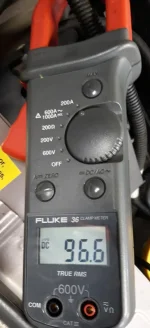
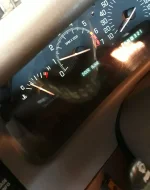
This works really well. The alternator is delivering 90-100A even at 1000rpm idle. Voltage is even under heavy load between 14.5V - 14.8V at the batterie, measured with a Fluke DMM. The voltmeter in the instrument panel shows 13.9V when the alternator has 14.8V.
It is a direct fit, same mounting as the 125 original alternator.
The main connection of the alternator was the same as the old one.
The connector for the control is in a slightly different place, but the cable is just long enough.
I have laid additional 35mm2 (AWG 2 ?) cables for plus 12V to the fuse box, and case of the alternator to ground to take care of the higher possible current.
This works really well. The alternator is delivering 90-100A even at 1000rpm idle. Voltage is even under heavy load between 14.5V - 14.8V at the batterie, measured with a Fluke DMM. The voltmeter in the instrument panel shows 13.9V when the alternator has 14.8V.