• This section is for help and assistance with 2018 and NEWER Buick Regals. If you need assistance with a 2011-2017 Buick Regal, CLICK HERE. If you need assistance with a 2010 or older Buick Regal, CLICK HERE. This notice may be dismissed by clicking the X in the right corner.
  • Car enthusiast? Join us on Cars Connected! iOS | Android | Desktop

Carbon buildup, intake cleaning, dirty valves, Direct Injection, Seafoam.....

Crispy

Member
Joined
Jun 12, 2019
Messages
67
Reaction score
38
Points
18
Buick Ownership
TourX
Greetings, New owner here with 2018 TourX. After my daughter became stranded on the highway last week, I have become obsessed with Direct Injection (DI) carbon buildup/fouling. Her car is a 2014 A4 which sounds a little more problematic than ours. I am a shadetree mechanic and have done all repairs on my cars for 45 years.
After a YouTube Bachelors Degree (4 hours) in Induction System Cleaning, I want to start doing some sort of preventative cleaning while the engine is still new. Maybe around every 10,000 miles. I read the Catch Can post here.
My question is, where is the best place is to squirt in CRC, Seafoam or whatever? I may even fabricate some sort of port with good fittings and a cap or plug to make the job easier and most effective.
Thanks in advance for any help and btw, we're loving this car, C.
 
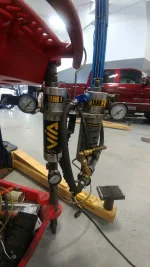
Man, as far as at home TBINJ services, I have no idea. But this is the set up for a proper fuel system service. on top of pulling cleaner through the lines and injectors, we also expose the throttle body plate and clean the throttle body. Honestly, a monkey can clean a throttle body plate. the actual induction service? I would let your service center take car of that. relearning the idle is necessary with this procedure. It's been a long time, but i had a tech forget to relearn the the idle and the customer was right back in our doors asking why the check engine light was on and idling high and rough.


17024
 
Personally, I add fuel system cleaners every time I fill up. i just use the BG additives we sell at the dealer i work for because its convenient. I used to use STP though. Then every 30,000 miles i pay a tech to do a complete fuel system and thottle body service. I'm only at 12000 miles with the GS, so I'm not quite there on this one.
 
I won't do anything at least under warranty. That was most a VAG thing and since Ecotec 2.0T has been around since 2006 without major problems I would avoid anything more than the recommended oil and gas along with an "Italian tuneup".
 
______________________________

Help support this site so it can continue supporting you!
Personally, I add fuel system cleaners every time I fill up. i just use the BG additives we sell at the dealer i work for because its convenient. I used to use STP though.

Of course that won't help the OP's concern on a DI engine.

Those VW/Audi engines were pretty bad for intake deposits. Newer cars are better. On Corvette Forum, Chevy's head engineer answered the question of intake deposits on DI engines as follows:

The short answer is: No, we have not seen any issue with deposit buildup on the back side of the intake valves due to not having a port injection system.

You correctly point out that the continuous flow of clean air and gas over the intake valve tends to keep it very clean. That has been a characteristic of small block V8's for decades. Of course, appreciation of that characteristic is limited to those who disassemble their engines. Most customers are unaware.

Given that all SIDI engines give up that benefit in favor of other important attributes, we did extensive testing to make sure there were no customer-observable penalties. We intently looked for unusual deposit formation during the entire Gen 5 Small Block development phase (4 years) as well as the 200,000 mile in-vehicle long term testing. We have not seen anything unusual and zero performance degradation. Granted, deposit formation on SIDI engine intake valves is greater than what is seen with PFI engines, but the Gen 5 engines are typical for SIDI engines, and in fact better than other SIDI engines we have benchmarked. So the bottom line is that we believe the carbon build up is only an internal cosmetic issue, not anything that will affect customers over the life of their cars.


And I'm inclined to believe him. LT V8s and the 3.6 V6 have had DI for many years now, and many engines have hundreds of thousands of kilometres on them, and you really don't hear much about problems with intake deposits.

It's also for this reason that I believe catch cans are really just a gimmick, with their manufacturers trying to hype up a non-existent issue in order to gain sales.

So in general, I'd say to keep your oil changed on schedule (or earlier) and you'll be fine for as long you'll be driving this car.
 
On off subject but the GM cleaning had a dealer specific tool, can't remember the company but it makes other GM tool, but the process was to warm up the engine, hook up the tool, spray in the cleaner and leave it sit. The big deal with the tool and the process was the tool prevented hydrolock as the cylinder had fluid in them. Is this still around or is it a new process?
 
On off subject but the GM cleaning had a dealer specific tool, can't remember the company but it makes other GM tool, but the process was to warm up the engine, hook up the tool, spray in the cleaner and leave it sit. The big deal with the tool and the process was the tool prevented hydrolock as the cylinder had fluid in them. Is this still around or is it a new process?
we use equipment from BG. but other petro companies make them as well. valvoline and petra make them too. the canisters get hooked directly into the high pressure fuel line. while the cleaner is being pulled through the lines and injectors, we disconnect the throttle body and spray the plate down with a cleaner. after the canisters have been emptied, we disconnect them, relearn the idle and take the vehicle for a short drive to make sure all cleaner has been burned off. If the procedure is not done properly, it can create hydrolock. in 6 years of writing service, I only had hydrolock happen one time.
 
It's also for this reason that I believe catch cans are really just a gimmick, with their manufacturers trying to hype up a non-existent issue in order to gain sales.

Ditto.
 
______________________________

Help support this site so it can continue supporting you!
Thanks for the info, again it may have been on a old TSB but the warning on how GM dealers were doing vs the back yard DIY was the DIY wouldn't read all the information and then had a very bad hydrolock day lol.
 
The only thing Im doing to My GS While its under warranty, is try to break it! I really drive it Hard! A total 3 year Shakedown Cruise.So far so good
 
Driving it like that during the warranty period, something might end up breaking after the warranty is expired. :thumbsdow
 
Well Said.
 
I tell you what my GS when I got it was not as nearly smooth and nice feeling until I got used to Really Driving it Hard. I decided not to baby it, Lets see what this Buick "Flagship"can do. Drive The GS like a GS!. Now? The Car feels so much more Responsive and tight. These Cars are Designed to drive all day on the Autobahn. So Please, Respect all Laws, Maintain and Detail your Car,Stay Sober behind the Wheel and DRIVE IT LIKE YOU STOLE IT ! 😎
 
Sorry if I am not up to speed on thread, I seem to have limited attention span..so will make this short..
Was Audi DI problem using only top tier gas? Were they using 85 octane farm gas in Utah?
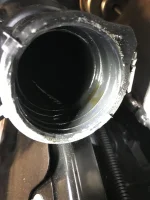
How much oil is your car goin through, or if that seafoam in picture?
 
Personally, I add fuel system cleaners every time I fill up. i just use the BG additives we sell at the dealer i work for because its convenient. I used to use STP though. Then every 30,000 miles i pay a tech to do a complete fuel system and thottle body service. I'm only at 12000 miles with the GS, so I'm not quite there on this one.
A typical fuel system service doesn’t address intake valve deposits on a direct injection engine, neither do fuel additives since fuel never touches the valve.
 
This problem is not issue with GM engines, most problems are reported by Audi, BMW and VW DI engines.
PS And some Ford problems with ecoboost engines.
 
Last edited:
Back
Top