Code P0446 in a 2003 Lesabre.

Jim Sparr

Member
Joined
Oct 8, 2023
Messages
79
Reaction score
56
Points
18
Buick Ownership
2003 Buick Le Sabre, 1986 Buick Regal
I have had since purchase a OBD II code P0446 indication a small leak in the EVAP system. The 'classic explanation' is the tighten the gas cap to correct this problem. That didn't work and the 'O'ring is in place and in good condition. I 'googled' this code on the net and the most prevalent was:
'EVAP system vent valve is clogged or cracked.'

1./ Could you please tell me where the EVAP vent valve is located on a 2k-2005 Buick 3.8L?

2./ What other problems could cause this code ? I have also heard of the ' EVAP system purge valve' being a common issue with this 3.8L V6. Is the purge valve and the vent valve the same ? Where do I find the EVAP
purge valve? Thank you for your help !

Thanks and a Merry Christmas and Happy New Year ! Jim in SC
 
The easiest way to find the leak is to have a shop smoke it. They use a machine to introduce smoke into the system and then visually look for the leak. Otherwise, you may end up replacing good parts. If you have an access panel for the fuel pump in the trunk, you may want to look at the pump mounting. Corrosion can compromise the mounting and seal of the pump to the tank and create a small leak there.
 
From my further reading, it looks like the Vent solenoid and the Purge solenoid are two different items, but both connected to the charcoal cannister. Isn't Youtube wonderful ?
 
Although you inspected the cap, I would suggest replacing. Especially if it's original or a poor quality replacement. Also as mentioned, clean the filler neck to ensure a good seal.
 
______________________________

Help support this site so it can continue supporting you!
From my further reading, it looks like the Vent solenoid and the Purge solenoid are two different items, but both connected to the charcoal cannister. Isn't Youtube wonderful ?
the purge valve is on top of the engine on the.. front of it (rear on a supercharged 3800) and it has a vacuum line with a squish-connect (idk how else to describe, you depress tabs to install and remove) and the other side is piped to the 3 fuel lines that run down the engine bay and under the car.

The vent valve is attached and very next to the charcoal canister which is near the fuel tank under the car and its something if you are gonna inspect it or throw parts canon at you need to check the easier things first.

First, pull your fuel pump access plate off (under your trunk felt and has hex screws, small ones like 7mm-10mm) and inspect the top of the fuel module on your fuel tank. Even send pictures if you want us to look for you.

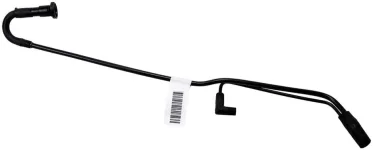
Then, under hood, inspect your vacuum harness to your purge valve. Is it old and cracked? Replace it. its a one piece harness for your purge valve, map sensor, and fuel pressure regulator. so you can replace it in parts but the whole harness is cheap and available from GM still. I can get you a part number if you are interested.
Its called an emissions harness and it connects to your throttle body as well. Then, the purge valve itself is kinda cheap and frankly they CAN leak over time, but its more likely to affect your fuel trims to the point your car would run funny but thats not necessarily always true.

Next, look at your fuel lines. The nylon and the metal you can see from the engine bay. Can you see rust or cracks or evidence of them being in bad shape? there are quick-connects to your engine and purge valve, can you smell fuel if you sniff close to them? There could be a need for new o rings.

if you see rusty lines, are they wet near the rust?

Finally, climb under the car(jack it up and put jack stands, or bring it to a lift somewhere) and look at the fuel lines running front to back, fuel filter, and look for rust and wet lines. if you see wet lines(specifically the vapor line but dont ignore the others either) then you need fuel lines and i would stop your diagnosis there until you fix that. Because no matter what else you do, leaky fuel lines arent gonna pass evaporative emissions tests on your car.
Then, if the lines are in good shape, you can begin to look at the charcoal canister. its a black rectangle mounted to a bracket its very visible. There are lines from the vent valve to the canister and I believe the line connects to it or the canister from the tank and one of them connects to the vapor line. So essentially those hoses could be degraded even with good metal lines.
 
Thanks to all who took time out of their Christmas day to help me locate these elusive parts. Now if the weather would cooperate. It is warmer but rainy here.
 
The first step is to replace the cap. If that doesn't work, proceed with the above troubleshooting.
 
Buick Girl, could you please get me a GM parts number for the whole harness ?:
'one piece harness for your purge valve, map sensor, and fuel pressure regulator. so you can replace it in parts but the whole harness is cheap and available from GM still.'
Thanks a lot, Jim in SC
 
______________________________

Help support this site so it can continue supporting you!
I just ordered the Original GM part above from Rock Auto for $19.88 plus tax and shipping.
 
I have a uestion on the installation of a new radiator in my 2003 LeSaber. The manufacturer sent two new brass fittings that attach to the radiator and receive the two Auto Transmission steel lines. This, of course,
 
I have a uestion on the installation of a new radiator in my 2003 LeSaber. The manufacturer sent two new brass fittings that attach to the radiator and receive the two Auto Transmission steel lines. This, of course,
yess,,,>
 
______________________________

Help support this site so it can continue supporting you!
I thought I had 'edited' my post but it obviously didn't take. I was trying to say:

I have a Question on the installation of a new radiator in my 2003 LeSaber. The manufacturer sent two new brass fittings that attach to the radiator and receive the two Automatic Transmission steel lines. This, of course, is to circulate the ATF through the small radiator inside the big radiator to cool it down. My question was: when you attach these two brass fittings to the radiator, should you use any sealant or Teflon tape to prevent ATF leakage ? None was supplied by the radiator manufacturer.
 
I thought I had 'edited' my post but it obviously didn't take. I was trying to say:

I have a Question on the installation of a new radiator in my 2003 LeSaber. The manufacturer sent two new brass fittings that attach to the radiator and receive the two Automatic Transmission steel lines. This, of course, is to circulate the ATF through the small radiator inside the big radiator to cool it down. My question was: when you attach these two brass fittings to the radiator, should you use any sealant or Teflon tape to prevent ATF leakage ? None was supplied by the radiator manufacturer.
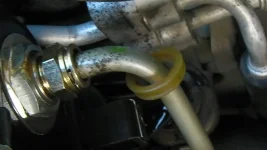
Show me your fittings, you should have a quick connect yes?1704856146801.webp
 
BGFM, I am able to take photo's but I cannot send them via the net. Sorry. I had searched the You tube and found the best video was this one from TRQ/ which is part of 1Auto who has a library of video's and now for some reason, TRQ is producing their video's. This one is good.

Please go to the link below and fast forward to 1./ 13.55 for the part on removing the two ATF cooling lines: first the lower and then the upper ATF line. Both are the same procedure. Then at about 17:00, it shows the installation of the two AT lines to the new radiator. My radiator attachments are the same as shown in this video and as your photo in No. 14 above. The two steel fittings are already attached by the manufacturer to the body of the rad. The two brass fittings come in a plastic bag as shown. I will install them into the two steel fittings on the RAD AT cooler portion using a 'U' shaped clip/ circlip?/ to secure the line to the fitting. The plastic ring is a retainer to prevent the 'U' clip from coming off.
My question is: should the brass fitting threads be covered with a sealant of some sort ? Water sealant for the threads or the white Teflon tape. One source said the inside of the two steel fittings on the Radiator already have the sealant inside. I always see the sealant or the Loctite on the threads of the attaching screws. Example: GM oxygen sensors come to mind.

News alert: I haven't mentioned this about my Lesabre. I have recently started the flushing and re flushing to prepare for the installation of the Part 1./ New radiator , two new AC Delco hoses ,and new AC Delco thermostat and then later-- Part 2./ the new water pump and new belt tensioner with two aluminum elbows/tip: replace the 'O' rings provided with the best 'O' rings you can find/ and, of course, a new serp. belt.
The first and second flush was very thick red, rusty slush. I am still trying to get this sludge completely out of the cooling system. I am using Prestone Flush and Cleaner with distilled water. Any ideas and suggestions will be welcomed. I want to be able to install these shiny new parts into a clean environment to assure a long, reliable life. Again the weather is not cooperating. We on the east coast finally had the storm that started on the west coast and swept across the country through Colorado, Texas and Louisiana, Arkansas. It hit us on Tuesday and we are still recovering.


back up video link --just in case:
 
BGFM, I am able to take photo's but I cannot send them via the net. Sorry. I had searched the You tube and found the best video was this one from TRQ/ which is part of 1Auto who has a library of video's and now for some reason, TRQ is producing their video's. This one is good.

Please go to the link below and fast forward to 1./ 13.55 for the part on removing the two ATF cooling lines: first the lower and then the upper ATF line. Both are the same procedure. Then at about 17:00, it shows the installation of the two AT lines to the new radiator. My radiator attachments are the same as shown in this video and as your photo in No. 14 above. The two steel fittings are already attached by the manufacturer to the body of the rad. The two brass fittings come in a plastic bag as shown. I will install them into the two steel fittings on the RAD AT cooler portion using a 'U' shaped clip/ circlip?/ to secure the line to the fitting. The plastic ring is a retainer to prevent the 'U' clip from coming off.
My question is: should the brass fitting threads be covered with a sealant of some sort ? Water sealant for the threads or the white Teflon tape. One source said the inside of the two steel fittings on the Radiator already have the sealant inside. I always see the sealant or the Loctite on the threads of the attaching screws. Example: GM oxygen sensors come to mind.

News alert: I haven't mentioned this about my Lesabre. I have recently started the flushing and re flushing to prepare for the installation of the Part 1./ New radiator , two new AC Delco hoses ,and new AC Delco thermostat and then later-- Part 2./ the new water pump and new belt tensioner with two aluminum elbows/tip: replace the 'O' rings provided with the best 'O' rings you can find/ and, of course, a new serp. belt.
The first and second flush was very thick red, rusty slush. I am still trying to get this sludge completely out of the cooling system. I am using Prestone Flush and Cleaner with distilled water. Any ideas and suggestions will be welcomed. I want to be able to install these shiny new parts into a clean environment to assure a long, reliable life. Again the weather is not cooperating. We on the east coast finally had the storm that started on the west coast and swept across the country through Colorado, Texas and Louisiana, Arkansas. It hit us on Tuesday and we are still recovering.


back up video link --just in case:
Use thermocure flush. Looks and smells nasty but it was able to make the aluminum inside of my radiator look shiny again when it looked like plaque on teeth before that
 
______________________________

Help support this site so it can continue supporting you!
BGFM, I am able to take photo's but I cannot send them via the net. Sorry. I had searched the You tube and found the best video was this one from TRQ/ which is part of 1Auto who has a library of video's and now for some reason, TRQ is producing their video's. This one is good.

Please go to the link below and fast forward to 1./ 13.55 for the part on removing the two ATF cooling lines: first the lower and then the upper ATF line. Both are the same procedure. Then at about 17:00, it shows the installation of the two AT lines to the new radiator. My radiator attachments are the same as shown in this video and as your photo in No. 14 above. The two steel fittings are already attached by the manufacturer to the body of the rad. The two brass fittings come in a plastic bag as shown. I will install them into the two steel fittings on the RAD AT cooler portion using a 'U' shaped clip/ circlip?/ to secure the line to the fitting. The plastic ring is a retainer to prevent the 'U' clip from coming off.
My question is: should the brass fitting threads be covered with a sealant of some sort ? Water sealant for the threads or the white Teflon tape. One source said the inside of the two steel fittings on the Radiator already have the sealant inside. I always see the sealant or the Loctite on the threads of the attaching screws. Example: GM oxygen sensors come to mind.

News alert: I haven't mentioned this about my Lesabre. I have recently started the flushing and re flushing to prepare for the installation of the Part 1./ New radiator , two new AC Delco hoses ,and new AC Delco thermostat and then later-- Part 2./ the new water pump and new belt tensioner with two aluminum elbows/tip: replace the 'O' rings provided with the best 'O' rings you can find/ and, of course, a new serp. belt.
The first and second flush was very thick red, rusty slush. I am still trying to get this sludge completely out of the cooling system. I am using Prestone Flush and Cleaner with distilled water. Any ideas and suggestions will be welcomed. I want to be able to install these shiny new parts into a clean environment to assure a long, reliable life. Again the weather is not cooperating. We on the east coast finally had the storm that started on the west coast and swept across the country through Colorado, Texas and Louisiana, Arkansas. It hit us on Tuesday and we are still recovering.


back up video link --just in case:
Okay I see what you have now, just like mine (old style) 1705046685057.webp
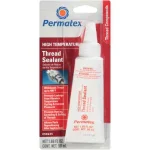
I would use something like this for the brass to steel threads
Make sure its high temp and not a tape product.(tape can distort the threads)
 
Most radiator ATF connections are inverted flare fittings. The sealing is between the flare and seat, not the threads. Just because they give you brass fittings does not mean you need to use them. Some of these radiators fit multiple cars.
 
Most radiator ATF connections are inverted flare fittings. The sealing is between the flare and seat, not the threads. Just because they give you brass fittings does not mean you need to use them. Some of these radiators fit multiple cars.
I guess I couldnt see from the photos of the flare seat you are speaking of, I wish I had mine off my car so I could just go look at it in hand lol. The clip retains the pipe into the fitting that is screwed into the radiator. the cars changed to quick connects in the 2000s sometime
 
The TRQ video shows the steel line going into the brass fitting on both upper and lower lines. No mention of any sealant needed. They are on a mission to keep the video's short and to the point. I am thinking they shoot for a 30 minute max. length.
I wish they would point out the things that should be done such as taking the opportunity to clean the condenser and the inside area behind the radiator. You see the leaves and other debris under the radiator.
 
Back
Top