Encore Tire Pressure

Another factor is the road conditions. Hitting a pot hole with a tire inflated to 30 PSI tire and than hitting that same pot hole with a tire at 43 PSI will be significantly different. At 30 PSI the sidewall flex will absorb some of the energy but at 43 PSI that sidewall is really stiff and the impact will be passed on significantly more to your struts/shocks and other steering components, not to mention you and your passengers . There are pros and cons to both pressure settings.

Curiously enough, the ride between 30 and 43 psi felt the same, but the handling and gas mileage was noticeably different.
 
Hi Guys, As I just read the thread, there are some people who have experience on the DIC and Tire Pressures, I just got a CPO Buick Encore Preferred, I noticed that whenever I fill the air in Front Left Tire, the DIC and panel shows the left rear tire increased, and vice versa, I had a 31 on Front Left as per DIC, wen to gas station and pumped it , now I see the rear left risen from 35 to 43 ? any one thinks the TPMS is glitch ? or should I CLR REST myself ?
 
It sounds like the rims have been rotated, so you may want to check the other side also. Reseting all would be the best route and see if the problem comes up again.
 
  • Like
Reactions: Han
Thanks for the reply 2007LucerneCXL , I think its best for me to do the RESET TPMS .. I am following the steps given in some blog ,,, will also check buick manual ....
 
______________________________

Help support this site so it can continue supporting you!
It's probably just a error after the tires were rotated as the TPMS only knows it on the car and doesn't following a change in location unless it's told, LOL.
 
I never knew the dealer had to do a relearn after a rotation. Learn something new every day!
 
______________________________

Help support this site so it can continue supporting you!
I had a Honda that would throw TPWL every now and then for no reason. I just took it in and they reset it and it would go away. No big deal. Those systems are extremely sensitive and they can get thrown off now and again.
I had a Kia before the Encore we just bought. I swear if anyone nearby was using a cell phone the TPMS would throw a warning light that would go back out within a few miles. It was almost completely useless.
Larry70GS has the best advice I've seen so far. Wet the tire and inspect the tread footprint. Worth noting is you want to drive on wet pavement, not through a puddle.
 
Sorry if this has been covered, but I couldn't find a thread. What is the correct tire pressure for the 18 inch tires? The sticker on the door reads 35 pounds, but On-Star and the Buick app says my tires are between 48 and 50 psi, which is acceptable. I usually follow what the door sticker reads, so this is odd. I haven't yet looked at the tire itself (sorry if I should have done so first) but I usually trust the door sticker. 35 psi sounds awfully soft...

Thanks!

Mike
35 psi COLD,,,,, ....remember in a cold climate the 35 psi will drop below that sitting overnight,,,, and Continental tire said this about the MAXIMUM pressure,,,,,,,,,," This tire has a maximum inflation pressure of 44 psi. "
 
Tire pressure will normally increase after you have driven the car. 4-6 psi is normal. As the tire rotates, the tire will bulge at the contact patch. Picture that bulge traveling along the entire tire as it rotates. That is partly what heats up the tire. The door sticker specifies cold inflation pressure. Check it first thing in the morning. Ambient temperature will affect pressure as well as sunlight.
 
These cars are pretty light riding on an 18" wheel & tire package - That door tag helps set the pressure so you get a full contact, and man I bet it would ride rough with 44psi in them. OnStar might just be looking at TPMS which will only report if they drop to 28 or so (I don't think they report for over-inflation).
 
With a fairly new car, I would follow the tire sticker as the manufacturer has figured it out for you. For any car that is more than say 6 or 8 years old, the tires today use higher pressures to carry the same load. Today tires that take 44 and 51 psi are common. I have found running 85-90% of the max inflation pressure listed on the tire works well. I have 44 psi Coopers on both my cars. I run 37 psi in the Cooper Cobras of my 1970 Buick GS455 Stage1, and 40 psi in the Cooper CS-5 tires on my 1998 Buick Riviera. Both cars ride very well with that inflation. Every car is different. You can always drop inflation pressures if the ride is objectionable. 85-90% of the max is what I say to start with.
 
X2 what X E Ryder says.

The only time you should deviate from the door sticker is if you put on tires that are outside of the OEM specifications, carry heavy loads, or tow heavy trailers. Every tire manufacturer, every online tire shop, and every auto manufacturer will tell you this. Age of the vehicle has nothing to do with it. If an old vehicle is riding better with higher PSI it's because the suspension needs work or the suspension has been modified or rebuilt with 3rd party parts.
 
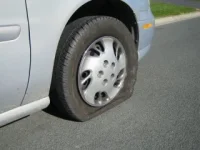
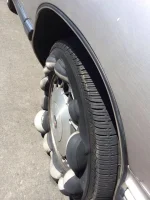
That over inflation picture is a hoot! I've never seen anything like that!
 
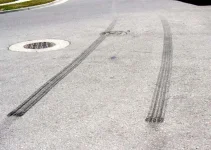
Back in a time when all cars were RWD there was another way of testing tire pressure. It wasn't for MPG or ride quality to say the least lol.
80elky-501r8.webp

But there is no ONE answer on tire pressure as it up to the individual owner for their vehicle what is proper for their tire size, type and driving conditions along with vehicle and tire manufacturers recommendations.
 
Back
Top