You are using an out of date browser. It may not display this or other websites correctly.
You should upgrade or use an alternative browser.
You should upgrade or use an alternative browser.
Strange coolant leak
- Thread author GBertolet
- Start date

HotZ28
Full Member Since 2005
- Joined
- Jul 1, 2005
- Messages
- 11,308
- Reaction score
- 2,525
- Points
- 113
- Location
- SE
- Buick Ownership
- 1996 Roadmaster Limited Collectors Edition 58k - 1996 PAU 2019 Regal GS
Yep, you got ripped off big time with that shop!! Now Sir, I need to asks one more question?? How was it determined 3-yrs ago that the head gaskets were blown? Did the shop do a compression test, leak down test & coolant pressure test to determine if there was a blown head gasket, or was that a just best guess estimate?? Blown head gaskets were/are very uncommon on the Series II engine unless there was a tremendous amount of overheating!I was watching a replacement video for the manifold, and the person doing the work used red loctite and staked the new EGR pipe in place. I don't think it was an ATP manifold. Is this step necessiary, as I don't see it in the ATP instructions?
I took some photo's of the old manifold. Is it the original OEM, if so, did I get ripped off?
GBertolet
Buick Newbie
- Joined
- Jul 24, 2017
- Messages
- 97
- Reaction score
- 20
- Points
- 8
- Buick Ownership
- Buick
I don't know how they arrived at that conclusion. They blamed it on Dexcool. That shop is under new management now. Ironicly, I was refered to that shop by my own service station, as they couldn't handle the work.
HotZ28
Full Member Since 2005
- Joined
- Jul 1, 2005
- Messages
- 11,308
- Reaction score
- 2,525
- Points
- 113
- Location
- SE
- Buick Ownership
- 1996 Roadmaster Limited Collectors Edition 58k - 1996 PAU 2019 Regal GS
Dexcool, has nothing to do with blown head gaskets on that particular engine unless the engine was severely overheated! It's no wonder that shop is under new management! Based on the info so far, I would be willing to bet, that there was never blown head gasket(s) in the first place!!I don't know how they arrived at that conclusion. They blamed it on Dexcool. That shop is under new management now. Ironicly, I was refered to that shop by my own service station, as they couldn't handle the work.
Last edited:
HotZ28
Full Member Since 2005
- Joined
- Jul 1, 2005
- Messages
- 11,308
- Reaction score
- 2,525
- Points
- 113
- Location
- SE
- Buick Ownership
- 1996 Roadmaster Limited Collectors Edition 58k - 1996 PAU 2019 Regal GS
Once you hammer the reduced EGR tube in place, it is not necessary to use red locktite. Where could it go with the UIM in place?I was watching a replacement video for the manifold, and the person doing the work used red loctite and staked the new EGR pipe in place.
imidazol97
Top Dog
- Joined
- Mar 30, 2005
- Messages
- 2,223
- Reaction score
- 533
- Points
- 113
I'm not sure about the date/time stamp circles on the top of the manifold. On my 1998 they were
clear--3 of them. I don't recall seeing a manifold with the tightening torques listed.
Remember the EGR valve has 2 rubber o-rings on it. I believe those are both supplied in the pack
that came with the manifold I got with the metal sleeve inside. Sometimes people leave off one
of the o-rings and it lets the vacuum from the intake suck directly from the oil sump causing a
whistling or roaring noise. Taking off the oil cap verifies someone left off the o-ring. I used to
have pictures to post, but those have been lost when the photo storing site dumped me.
clear--3 of them. I don't recall seeing a manifold with the tightening torques listed.
Remember the EGR valve has 2 rubber o-rings on it. I believe those are both supplied in the pack
that came with the manifold I got with the metal sleeve inside. Sometimes people leave off one
of the o-rings and it lets the vacuum from the intake suck directly from the oil sump causing a
whistling or roaring noise. Taking off the oil cap verifies someone left off the o-ring. I used to
have pictures to post, but those have been lost when the photo storing site dumped me.
GBertolet
Buick Newbie
- Joined
- Jul 24, 2017
- Messages
- 97
- Reaction score
- 20
- Points
- 8
- Buick Ownership
- Buick
There are no EGR orings in my packet, just 6 small orings and sleeves for the injectors, a PCV valve, two different size EGR tubes, and a mounting bracket for a sensor at the right end of the manifold. I did not have to touch the EGR valve to remove the old manifold, so I don't know anything about the two orings. Could you please clarify.
Everything is off, and cleaned up, and I am getting ready to place the new manifold, and I want to be sure I don't miss anything. I need to get antifreeze and spark plugs yet.
Should I start the engine with the old oil still in it, and let it run for a few minutes, to pick up more coolant before the oil change, or should I change oil first, before starting it up at all?
Everything is off, and cleaned up, and I am getting ready to place the new manifold, and I want to be sure I don't miss anything. I need to get antifreeze and spark plugs yet.
Should I start the engine with the old oil still in it, and let it run for a few minutes, to pick up more coolant before the oil change, or should I change oil first, before starting it up at all?
Last edited:
HotZ28
Full Member Since 2005
- Joined
- Jul 1, 2005
- Messages
- 11,308
- Reaction score
- 2,525
- Points
- 113
- Location
- SE
- Buick Ownership
- 1996 Roadmaster Limited Collectors Edition 58k - 1996 PAU 2019 Regal GS
It's getting late & I am confused about the previous messages about the EGR valve??? The EGR has a gasket and no O-rings. I think we originally meant to say the PCV valve which is located on top of the the passenger side UIM. Please correct me if I am wrong. 😴 BTW. drain the oil & change the filter before starting the engine. That is why we recommend changing the oil two times. Drain the cheap oil & replace the filter after a few hundred miles then do it once again using the best synthetic oil/filter of your choice!There are no EGR orings in my packet, just 6 small orings and sleeves for the injectors, a PCV valve, two different size EGR tubes, and a mounting bracket for a sensor at the right end of the manifold. I did not have to touch the EGR valve to remove the old manifold, so I don't know anything about the two orings. Could you please clarify.
Everything is off, and cleaned up, and I am getting ready to place the new manifold, and I want to be sure I don't miss anything. I need to get antifreeze and spark plugs yet.
Should I start the engine with the old oil still in it, and let it run for a few minutes, to pick up more coolant before the oil change, or should I change oil first, before starting it up at all?
Last edited:
GBertolet
Buick Newbie
- Joined
- Jul 24, 2017
- Messages
- 97
- Reaction score
- 20
- Points
- 8
- Buick Ownership
- Buick
I got it all together. It went together easier than it came apart. No parts left over! I need to do the oil change, get some coolant, and spark plugs. So far, I have been unable to get the spark plug boots off. They are really stuck on. I tried spraying WD40 on the wires, hoping it creeps into the boots, and loosens them overnight. If that fails, I may have to buy the special pliers for these.
I think the PCV is in the middle of the manifold, on the back side. It has two hoses going to it. The device on the left side on top, I believe is the EGR sensor, which has an electrical plug attached to it. It's mount has one big oring attached to it, to slip into the manifold, with no provision for a second one. The sensor attaches to the mount, by pressfit rubber. I could be wrong on these designations, correct me if I am.
I think the PCV is in the middle of the manifold, on the back side. It has two hoses going to it. The device on the left side on top, I believe is the EGR sensor, which has an electrical plug attached to it. It's mount has one big oring attached to it, to slip into the manifold, with no provision for a second one. The sensor attaches to the mount, by pressfit rubber. I could be wrong on these designations, correct me if I am.
Last edited:
HotZ28
Full Member Since 2005
- Joined
- Jul 1, 2005
- Messages
- 11,308
- Reaction score
- 2,525
- Points
- 113
- Location
- SE
- Buick Ownership
- 1996 Roadmaster Limited Collectors Edition 58k - 1996 PAU 2019 Regal GS
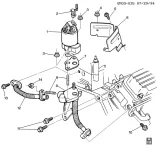
No O-rings on the EGR valve, but as mentioned two on the PCV valve. Don't be confused by right & left sides. Right side is the passenger side & left side is the drivers side!
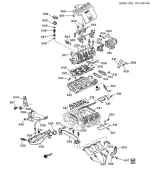
1998 Buick Lesabre LIMITED 4DR ENGINE ASM-3.8L V6 PART 5 MANIFOLDS & FUEL RELATED PARTS
Diagram of OEM ENGINE ASM-3.8L V6 PART 5 MANIFOLDS & FUEL RELATED PARTS. Contains 20 parts priced between $2.92 and $466.13. Fits 1998 Buick Lesabre LIMITED 4DR.
www.wholesalegmpartsonline.com
1998 Buick Lesabre LIMITED 4DR E.G.R. VALVE & RELATED PARTS
Diagram of OEM E.G.R. VALVE & RELATED PARTS. Contains 6 parts priced between $5.48 and $273.33. Fits 1998 Buick Lesabre LIMITED 4DR.
www.wholesalegmpartsonline.com
Last edited:
fullmonte44
Full Member
- Joined
- Aug 21, 2014
- Messages
- 124
- Reaction score
- 16
- Points
- 18
- Buick Ownership
- Buick
Just to clarify, GB, the reason to change the oil immediately is not just for the residual coolant, but because during the teardown, a lot of dirt and small pieces of gasket can fall through into the oil sump. Just drain it right away. Some even pour a quart of oil down in the valley there to help pull all the crud on into the sump- for draining!
GBertolet
Buick Newbie
- Joined
- Jul 24, 2017
- Messages
- 97
- Reaction score
- 20
- Points
- 8
- Buick Ownership
- Buick
The car is up and running. Oil change, fresh coolant, and new plugs. I am glad we had the back and forth about the PCV. I thought a new PCV was included in the new housing mount. It wasn't. I found one at the bottom of the old mount, along with the spring. I quickly swapped it over. I guess I would have discovered this eventually, when the engine didn't run right. I never had this engine apart this far before, so it was a learning experience for me.
I got 7 quarts of oil out in the drain pan. So about 2 quarts of coolant infiltrated the oil. I did crank over the engine briefly with the plugs removed, to see if any coolant came out, which none did. I had to remove the brace bar, to get to the rear plugs. The plug pliers made the job less profanity ridden. With the plugs then installed, the engine started right up, ran a little rough for 10 seconds, then smoothed out. I cleared the P0300 code, and hope it's gone for good. It's real smooth and quiet now. I will keep checking for leaks. I hope this adventure is over.
Total cost so far, was just under $150. $80, inc tax and shipping for the manifold, $32 for the plugs, $13 for 1 gal antifreeze, $20 for oil and filter. Will need another oil change in the near future. Supposedly this manifold is of a more efficient design then the GM one is. Maybe I will get a couple of more HP, and slightly better MPG.
I got 7 quarts of oil out in the drain pan. So about 2 quarts of coolant infiltrated the oil. I did crank over the engine briefly with the plugs removed, to see if any coolant came out, which none did. I had to remove the brace bar, to get to the rear plugs. The plug pliers made the job less profanity ridden. With the plugs then installed, the engine started right up, ran a little rough for 10 seconds, then smoothed out. I cleared the P0300 code, and hope it's gone for good. It's real smooth and quiet now. I will keep checking for leaks. I hope this adventure is over.
Total cost so far, was just under $150. $80, inc tax and shipping for the manifold, $32 for the plugs, $13 for 1 gal antifreeze, $20 for oil and filter. Will need another oil change in the near future. Supposedly this manifold is of a more efficient design then the GM one is. Maybe I will get a couple of more HP, and slightly better MPG.
imidazol97
Top Dog
- Joined
- Mar 30, 2005
- Messages
- 2,223
- Reaction score
- 533
- Points
- 113
In post #26 I said EGR o-rings and that should have been PCV. Wrong 3 letters.
Glad to read you got the car up and running.
Glad to read you got the car up and running.
HotZ28
Full Member Since 2005
- Joined
- Jul 1, 2005
- Messages
- 11,308
- Reaction score
- 2,525
- Points
- 113
- Location
- SE
- Buick Ownership
- 1996 Roadmaster Limited Collectors Edition 58k - 1996 PAU 2019 Regal GS
Congratulations, and thanks to all the members here who participated in this thread. You have some great info! This thread should become a "sticky" concerning collant leaks & UIM replacement. The other two stickies in the LeSabre forum are all dead! No pics or links to pics work anymore! Maybe Sal can update this LeSabre forum? Well, now I noticed that one old sticky seems to be working again?
Last edited:
GBertolet
Buick Newbie
- Joined
- Jul 24, 2017
- Messages
- 97
- Reaction score
- 20
- Points
- 8
- Buick Ownership
- Buick
Just out of curiosity, what would have this job cost, if I took it to a repair shop or dealership?
HotZ28
Full Member Since 2005
- Joined
- Jul 1, 2005
- Messages
- 11,308
- Reaction score
- 2,525
- Points
- 113
- Location
- SE
- Buick Ownership
- 1996 Roadmaster Limited Collectors Edition 58k - 1996 PAU 2019 Regal GS
Did you replace the LIM gaskets? If not, the average ASE independiant shop for only an UIM replacement could run between $600.00-$800.00, much more if the dealer was involved!