Where does the oil go?

Human

Active member
Joined
Dec 22, 2019
Messages
377
Reaction score
204
Points
43
Buick Ownership
Present: 2013 Lacrosse hybrid (x2). Past: 1984 Century Custom (1992-96); 1977 Skylark (1983-88).
I took a 500-mile road trip this past weekend, and in doing a pre-trip maintenance check on Thursday, I noticed the oil was down a quart, so I topped it up. I checked it again yesterday and everything looked normal when I pulled the dipstick out the first time, but then I wiped it off, stuck it back in and pulled it out to confirm, and the dipstick came back DRY, like there was no oil in the crank case at all. Needless to say, I poured in the remaining oil I had on hand and the level showed normal again. The weird thing is there is no sign of leakage and no oil stains on my driveway, where it sits. I'm also not seeing plumes of smoke coming out of the exhaust, although the rear bumper has a perpetual soot stain where there isn't a cutout, since car is a 2.4L eAssist Hybrid. What could be happening to all that oil and why didn't I get any sort of warning on the instrument panel? Ideas, anyone? The car is just before turning 97,000 miles, so at the very least, I think it's time for high mileage formulation oil.
 
It's coming out the tailpipe, I thjnk my 2010 is also starting to burn oil, it is at 176k km.
 
My '13 Premium has always used some oil, but it seems to be increasing. It has about 118,000 miles.
 
These TSBs might give you some insight.


I think GM extended the engine warranty on some of these 2.4L engines for pistons and rings.

The PCV is a tiny hole that gets clogged so maybe this is the root of the issues.

You need to use the proper full synthetic DEXOS oil specified in the owners manual. Consider changing at the earlier of 5k miles or 1 year (or sooner). I would check the oil several times a week on flat ground.

Low oil can kill the timing chain and tensioners quickly...among other problems.

I don't know if these links help but are interesting
 
______________________________

Help support this site so it can continue supporting you!
This is all very interesting information, especially the idea that a dry dipstick doesn't necessarily indicate a dry crankcase. That's actually a relief. It means the car is using a whole lot less oil than I previously thought. It's still an inordinate amount, but a little over a quart in 500 miles is better than five quarts in 500 miles. Last summer, I had to replace the timing set, which could be related to all this. I guess plugs and wires are on tap for this summer. If I'm feeling brave, I may try the Gumout w/PEA treatment.
 
Our 2.4L hybrid has about 35k miles. Car runs and looks like new.

The Terrain forums have a lot of info on the 2.4L engine. These things are uber-sensitive to DEXOS oil which is clean and always full. Some of my notes (which may not be relevant to the Lacrosse):

Some timing claims that may impact us:
- the timing chains CAN have a long life but get killed very quickly by low oil
- the tensioner apparently was improved, and the new part number is less prone to failure.
- the plastic guides break easily, shortening the life of the chains
- a timing guide bolt tends to fail (or loosen up), damaging the timing chain. An improved design is made by Melling or Dorman (see links below). I'm not 100% clear if installing this requires resetting the timing chain tensioner, which would require some disassembly. In anycase, it is easy to check if the original bolt is coming loose.


The high pressure fuel pumps don't seem to last too long. Gasoline will dilute the engine oil and cause other rich issues. Sometimes a code will pop up. We had no codes but discovered the problem as oil level was rising (and smelled like gasoline). The stainless hose is one use only so needs to be replaced too. We changed oil right after replacing HPFP. Engine runs much quieter with new pump.

The cam solenoids get too hot, so they have short lives; replace BOTH intake and exhaust at the same time which are different parts, use only OEM parts. An engine code for exhaust solenoid popped up for us. Car ran much smoother after change.

Forums indicate the failure can be intermittent. and is from hot placement on top of engine. Both solenoids bench tested fine at room temperature (around 10 ohms resistance, no visible damage, seemed to operate correctly with 12v bursts).

The tiny PCV hole is hack engineering. When it clogs with carbon, I don't know all the symptoms, but maybe include:
- Increased oil consumption
- Rich operation so increased fuel consumption
- In cold climates, water in PCV piping and holes can freeze up; the pressure in the engine needs to go somewhere, and tends to blow rear main seals, leaving the engine without oil. The official fix seems to be to remove the intake manifold, clean-and-overdrill the PCV hole (see TSB above). I have seen techs blow some cleaner to make sure the (4?) channels are clear.

Removing the intake manifold is not so easy on the Hybrid model (I think there were the generator and hybrid, cooling and high voltage parts blocking the manifold but can't remember). Our local library stopped stocking Alldata and we couldn't find full instructions on the internet, so we still haven't serviced that PCV hole.

In cold weather, I have seen some other techniques to try to prevent busted rear main seal.

- catch can. Not sure if one needs clean side, dirty side, how to pipe, or if these help or hurt. They need to be emptied periodically.

- I saw one guy install a brass fitting outside the plastic manifold so he can clear the pcv hole with a paperclip without removing the manifold. It is difficult to drill the delicate plastic manifold without breaking it.

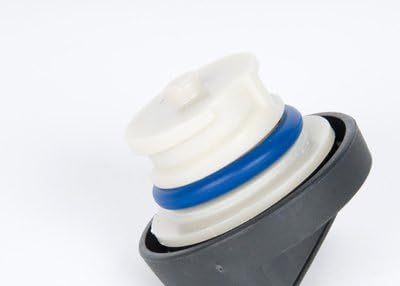
- the FC219 oil cap to try preventing rear main seal failure. Not sure if that is approved by GM for the LaCrosse and it's use is controversial.

 
Last edited:
Seems like the engine should have a compression test done to see if the pistons are pressuring up to the spec.
 
Forgot to add the fancy direct injection system system does not rinse the intake valves with fuel, so intake valves get carboned up. I don't see so many complaints on the 2.4L engine but this seems to be a disaster for some VW-Audi engines.

Some shops can remove the intake manifold and blast the contaminants off with chemicals, walnut shell blasting, or scrub brushes. There are sprays one can use without removing the intake but I'm not sure they are as effective. Not sure how frequently this is done. Maybe a catch can install could help prevent this issue.

Also, some Terrain 2.4L owners moved to very frequent DEXOS oil changes. That is the shorter of 1 year or say 5k miles (some are doing 3k or 4k miles). The engines MUST run on DEXOS full synthetic oil as recommended in the owners' manual and updated by GM. And check oil levels more frequently than WEEKLY. This is provides some cheap insurance against piston ring & timing chain issues IMHO.

When changing oil, change the oil filter, replace the o-ring on the oil filter housing, replace the o-ring on the drain plug "o-ring".
 
______________________________

Help support this site so it can continue supporting you!
I dont know what weight oil the manual calls for but my daughter's car was using oil and leaking in various locations. We witched from the factory 0W-20 to 5W-30 and all those issues stopped. I was told by the guy at my shop that the 0W-20 is nothing more than the factory trying to squeeze another mpg or two from the engine via lower turning resistance. I can see that but we've had no further problems with consumption on her car.
 
Human, I have same exact problem with my 13 Lacrosse 4v e assist w/ big battery in trunk. I’ll have full tank of oil, road-trip and 300 miles later oil light goes on. No one could fix. Disappearing oil. No stains, no smoke, no smell. Now I have codes po 0016 and po 0017 cam shaft an and crankshaft a. Now it’s stuck in low power mode. Last few years just driving locally with case of oil in trunk. But now with the timing belt issue I can’t get out of 2nd gear. Wasn’t going to get timing chain fixed because it still has oil issue.
Does oil in cam shaft mean something with timing chain. I think I’ll bring it in.
 
1. TIMING CODES

Low oil levels seem to cause timing chain issues with these engines pretty quickly (e.g. stretched chains).

One tell tale of timing chain/guide/tensioner issues would be a short metallic sound on first morning start up (say 1 second or less).

Timing issues are typical for those p0016 and p0017 codes. But those could just be low oil, wrong oil spec, bad cam sensor, bad cam solenoid, non-OEM parts. A tech has a lot of tools to check the real source (e.g. reading the sensors, read desired vs actual positions of cams, etc.)

This thread might help you with those timing codes.

2. OIL CONSUMPTION

Nobody seems to know the source of oil consumption from these. But GM issued service notes on the PCV orifice (intake manifold) and piston/rings.

We tried a cheap way to reduce oil consumption which you can find on the forums. But our car was low mileage, didn't consume too much oil, and had no timing issues:

1- drill a hole to clear the PCV orifice with a paper clip.
(alternatively, one could just replace the intake manifold (and maybe the valve cover too?))
2- valvoline restore & protect oil to clean up the piston rings.
(alternatively, there are other more aggressive chemicals to clean piston rings too.)
 
All of these problems are just more reasons that I would not even consider buying a Lacrosse with that engine. The 3800 may not be as technically "advanced" as these small turbo engines but I'm pretty sure that my LeSabre will probably outlast me.
 
______________________________

Help support this site so it can continue supporting you!
Back
Top