• 🔍 Like our community? You can tell Google to show you results from this site more often. Just Click Here and click the empty checkbox on the right side of our name.

Buick Forums - The Buick Owners Group

As an Amazon Associate we earn from qualifying purchases.
What's on your mind?
E
Last reply · posted in Buick LaCrosse Forum (Allure)
My sister ran the car after it overheated. There is a bad coolant leak that appears to be coming from under the intake manifold. It is running along the block where it meets the head on the drivers side. There is also water coming from under the car on the passenger side, but am unable to see its origination. I know some of the engines have an issue with the intake manifoldleaking but could not find any info about the 3.0L. I will take the manifold off if I have to, but was hoping there was some info I need to know about this. I am hoping it is not a cracked head or head gasket.
7 Replies · 5207 views
E
Rider 47,
Thank you for that info. It was actually 5/16 inside diameter and I got 3 feet of it. If I were to do it again I would get a little more because it is a fairly tight fit. I was able to get the hose over the bump in the nipple of the thermostat housing so I could get the clamp on the inside of it. It took a little loosening up with a screwdriver to make the hose a little wider and some muscle to push it on, but it finally went. This worked, but unfortunatly there is still a small amount of water coming out from under the intake manifold on the drivers side. Next step is to take off the intake manifold and have a look.
Thanks again.
R
Sorry I got the I.D. wrong but glad you figured it out. I t was hard for me to guess the working length of hose I needed. I just gave it my best
guess cause ya got to snake it through a lot of stuff. I have been dealing with a small amount of leakage for several months so I just got
in the habit of topping of the surge tank on occasion. I'm guessing over time the engine heat might cause the rubber to bond a little
better to the end fittings. My coolant loss seems to be dropping off as the rubber hose gets a little age on it.
E
Update. Final outcome. The car was still leaking a little bit of coolant. I used a NAPA block leak tester and found there was an exhaust leak into the coolant. It seemed to be minor, so I did a very thurough flush on the system and added some Blue Devil block sealer. I am not a fan of mechanic in a bottle, but figured I would give it a try as my sister does not have the money to do major repairs. To my shock, it worked. I retested with the block leak tester and it showed no leak. There are some videos on utube that show the process. Thanks again for the help.
R
Update. Final outcome. The car was still leaking a little bit of coolant. I used a NAPA block leak tester and found there was an exhaust leak into the coolant. It seemed to be minor, so I did a very thurough flush on the system and added some Blue Devil block sealer. I am not a fan of mechanic in a bottle, but figured I would give it a try as my sister does not have the money to do major repairs. To my shock, it worked. I retested with the block leak tester and it showed no leak. There are some videos on utube that show the process. Thanks again for the help.
Good tip on NAPA block leak tester and Blue Devil Sealer. I'll check out the YouTube videos. Thanks.
R
My sister ran the car after it overheated. There is a bad coolant leak that appears to be coming from under the intake manifold. It is running along the block where it meets the head on the drivers side. There is also water coming from under the car on the passenger side, but am unable to see its origination. I know some of the engines have an issue with the intake manifoldleaking but could not find any info about the 3.0L. I will take the manifold off if I have to, but was hoping there was some info I need to know about this. I am hoping it is not a cracked head or head gasket.
M
Last reply · posted in Buick LeSabre Forum
I have a 01 and a 04 lesabre I noticed the pressure is at 130, and says normal. Is that normal?
5 Replies · 168 views
ulycyc
No, if it always reads 130 the the sensor is bad
  • Like
Reactions: 02LTD2.0
M
No, if it always reads 130 the the sensor is bad
It moves back and forth from 130 to 129 on both cars. It's been like that for many years, next to 130 it says normal. What should it read at, I can't find anything about what is normal. With the key on says zero pressure.
ulycyc
You may have the wrong sensor installed. Cold start up around 75-80 and hot driving 45-60. will vary with eng temps , rpm, and oil used
  • Like
Reactions: 02LTD2.0
M
Thanks, still has the original part in both cars, since it says normal I never looked into it.
02LTD2.0
The sensors are OLD!! You should replace them soon or at the bare minimum at your next oil change. They could rupture and start spurting out oil. Ask me how I know.
N
Last reply · posted in Buick LeSabre Forum
I did the quick fix of the replacing the temperature sensor, I did not drain the whole system, just made sure to be ready to replace it seconds after taking the old one out and only lost maybe 2 to three cups max of coolant. I however doing that did want to make sure I topped it off and when I took off the radiator cap, saw a decent amount of orange brown sludge / gunk. Now I am thinking it would be best to do a coolant flush, or could I possibly by doing that make things worse off than just letting it stay? If I do, I have been reading a little, should I do the multi flush idea with distilled water for a couple until it's clear and then coolant or just change the coolant and be done with it or even just use the flush cleaner? And lastly, does anyone have a recommendation on what coolant is the best, I know the car did have its radiator replaced before I bought it and I do not think it's using the DEX anymore.

Thanks.
33 Replies · 2283 views
  • Like
Reactions: JGBuick
DrivenDaily
De-ionized water sounds a lot like what a water softener does. It uses an ion exchange process to reduce the hardness of the water.

Before being treated, mine rates at 12.2, where 10.3 is about the top of the scale! The added benefit I get with my whole-house system is that it also has a pre-filter and then a charcoal filter. I had the RO kit installed under the kitchen sink at the same time. It provides water to a dedicated spigot for drinking water, and tees over to the water for the fridge as well.

I can get around 1½ to 2 gallons of RO water from its tank. I use it to mix powdered Celsius drinks into bottles that hold 3 liters (101 ounces) each. I've filled 3 of those back-to-back and the last one was running a little slower, indicating that the tank was about spent.
BuickGirlFromMars
De-ionized water sounds a lot like what a water softener does. It uses an ion exchange process to reduce the hardness of the water.

Before being treated, mine rates at 12.2, where 10.3 is about the top of the scale! The added benefit I get with my whole-house system is that it also has a pre-filter and then a charcoal filter. I had the RO kit installed under the kitchen sink at the same time. It provides water to a dedicated spigot for drinking water, and tees over to the water for the fridge as well.

I can get around 1½ to 2 gallons of RO water from its tank. I use it to mix powdered Celsius drinks into bottles that hold 3 liters (101 ounces) each. I've filled 3 of those back-to-back and the last one was running a little slower, indicating that the tank was about spent.
deionized water from the store is good, as well as distilled.

If you have debris in your system, id think uysing distilled gives you a better chance of protecting against further problems and cleaning it out with aa mix of coolant
I don't use distilled or deionized water, I just use water from my old reverse osmosis system. I remember reading years ago that deionized water is somehow corrosive to metal. As in it's somehow different than distilled or 0 ppm water on a molecular level. I don't know. My system isn't a drinking water style setup that short cycles into a pressurized tank. Those don't work. Mine is for a hydroponic/aquarium application. Yesterday it was putting out 5 parts per million total dissolved solids. Functionally the same as distilled for any application I'd use it for. I've also been drinking that since 2010.

I've been using premix for a few years, I figure whatever water they mix into it has to meet their liability requirements. Lol

My current theory is that I was wrong about being able to get enough out by filling and draining the system 3 times with reverse osmosis water, letting it get hot before draining each time. Now I suspect some kind of coating is still stuck to the inside of everything from the dexcool and you do actually need something to get that out. Or maybe just leave the reverse osmosis water in and drive around for a week if it's the summertime. With something added to lubricate the water pump shaft seal I'd guess.

Makes me think of the HD applications where they run coolant filters. Keep any crap out of circulation. They also slowly leach a chemical into the coolant too. Probably the same kind of chemical as what's in the little bottle from fleetguard that makes the green coolant cummins approved.
Do you by chance have any white coating inside the radiator, inside the hoses, inside the coolant jacket as visible from the thermostat housing/neck/intake or water pump (if you pulled the hose of )

Deionized water has the risk of introducing and promoting microbial growth esp with regards to dexcool type coolants, but if you mix 50:50 and flush thoroughly you should not have any problems.
9
DrivenDaily, I believe a water softener's ion exchange is swapping calcium and magnesium for sodium and potassium, 2 "softer" ions. But table salt is sodium chloride, so if your water has sodium ions in it, to me that is still "salt", myself, I wouldn't put that in a cooling system. Those ions do show up on a tds/ec (total dissolved solids/electrical conductivity) meter, which measures the electrical conductivity of the water. Way I see it, just because it won't leave crud on your faucets, shower head, etc doesn't mean it won't facilitate corrosion, since 2 dissimilar metals in an electrically conductive solution creates a battery.

More on EC/TDS, have you measured your reverse osmosis water to see what it actually is? Without doing that, you won't know. If your incoming tap water is 6 or 700, maybe even 800 ppm, when that system starts putting out water, it'll be high at first, say 400 or 500, and then slowly drop down, over maybe a minute or so. A typical drinking water system that fills a pressurized tank will put a lot of high tds water into that tank, since it's always short cycling. A good system will drop it down into the single digits, like 4 ppm. The membrane actually does not allow only water molecules to pass though, it's pressure difference dependent. There is a calibrated restrictor on the bypass side, that creates a certain pressure drop. I can't remember exactly how this is set up, but I know when I went from a 75gpd to a 100 gpd membrane, I could not figure out why my tds wouldn't drop below 20 or 30 or so. Initially I suspected my new membrane was somehow bad, or that my input water pressure was too high, but I eventually learned that I needed a higher flow restrictor on the waste water side to match the higher flow membrane.

After thinking a little more about the DI water thing, it actually sort of makes sense why they would recommend that with their coolant. Since of course once it's mixed in with coolant, it's no longer DI anymore, if their mix has anything in it that makes it electrically conductive. I guess whatever they mix into it has the ability to inhibit corrosion, although I don't know how. I've heard of coolants described as "organic acid technology", which seems weird to me, like you'd want any kind of acid in your cooling system. ? To me it's more intuitive that you can have the coolant be somewhat electrically conductive if it is a base, or higher than 7 on the pH scale, because bases don't dissolve metal like acids. I just googled it and the general consensus seems to be that coolants are always basic, despite being made up of different chemicals or additives. I supposed I could measure it myself with my old hanna 98129 ec/tds/pH meter, but I doubt the pH probe is still good, after sitting for so long.
9
Deionized water has the risk of introducing and promoting microbial growth esp with regards to dexcool type coolants
I suppose this depends on how the DI water was made. If it were made in a way that did not remove any of the stuff that doesn't form an ionic solution, then then it could still have who knows what dissolved in it. But with other methods to purify the water first, like reverse osmosis, distillation, etc, and then running it through the DI stage, it should not be able to support the growth of anything at all.

I'm always amazed at how with only 4 or 5 parts per million total dissolved solids, after a while my clear glass drinking water container will start to show green algae growing in it. For reference, most guys growing with deep water culture, near harvest are pushing 1000 ppm. In other words, the drinking water has .0005 the "fertilizer" content of the hydroponic solution, yet it is still able to grow algae.
BuickGirlFromMars
I suppose this depends on how the DI water was made. If it were made in a way that did not remove any of the stuff that doesn't form an ionic solution, then then it could still have who knows what dissolved in it. But with other methods to purify the water first, like reverse osmosis, distillation, etc, and then running it through the DI stage, it should not be able to support the growth of anything at all.

I'm always amazed at how with only 4 or 5 parts per million total dissolved solids, after a while my clear glass drinking water container will start to show green algae growing in it. For reference, most guys growing with deep water culture, near harvest are pushing 1000 ppm. In other words, the drinking water has .0005 the "fertilizer" content of the hydroponic solution, yet it is still able to grow algae.
algae im pretty sure can be exacerbated with certain compounds in water but it ultimately isnt likely to NOT grow because its pure water, im pretty sure just being open and exposed the water is collecting organic matter and microbial species lol
BuickGirlFromMars
DrivenDaily, I believe a water softener's ion exchange is swapping calcium and magnesium for sodium and potassium, 2 "softer" ions. But table salt is sodium chloride, so if your water has sodium ions in it, to me that is still "salt", myself, I wouldn't put that in a cooling system. Those ions do show up on a tds/ec (total dissolved solids/electrical conductivity) meter, which measures the electrical conductivity of the water. Way I see it, just because it won't leave crud on your faucets, shower head, etc doesn't mean it won't facilitate corrosion, since 2 dissimilar metals in an electrically conductive solution creates a battery.

More on EC/TDS, have you measured your reverse osmosis water to see what it actually is? Without doing that, you won't know. If your incoming tap water is 6 or 700, maybe even 800 ppm, when that system starts putting out water, it'll be high at first, say 400 or 500, and then slowly drop down, over maybe a minute or so. A typical drinking water system that fills a pressurized tank will put a lot of high tds water into that tank, since it's always short cycling. A good system will drop it down into the single digits, like 4 ppm. The membrane actually does not allow only water molecules to pass though, it's pressure difference dependent. There is a calibrated restrictor on the bypass side, that creates a certain pressure drop. I can't remember exactly how this is set up, but I know when I went from a 75gpd to a 100 gpd membrane, I could not figure out why my tds wouldn't drop below 20 or 30 or so. Initially I suspected my new membrane was somehow bad, or that my input water pressure was too high, but I eventually learned that I needed a higher flow restrictor on the waste water side to match the higher flow membrane.

After thinking a little more about the DI water thing, it actually sort of makes sense why they would recommend that with their coolant. Since of course once it's mixed in with coolant, it's no longer DI anymore, if their mix has anything in it that makes it electrically conductive. I guess whatever they mix into it has the ability to inhibit corrosion, although I don't know how. I've heard of coolants described as "organic acid technology", which seems weird to me, like you'd want any kind of acid in your cooling system. ? To me it's more intuitive that you can have the coolant be somewhat electrically conductive if it is a base, or higher than 7 on the pH scale, because bases don't dissolve metal like acids. I just googled it and the general consensus seems to be that coolants are always basic, despite being made up of different chemicals or additives. I supposed I could measure it myself with my old hanna 98129 ec/tds/pH meter, but I doubt the pH probe is still good, after sitting for so long.
the acid technology keeps the aluminum from having a mineral corrosion buildup, the coolant also has parts that constantly refresh the surface between coolant and aluminum if any damage occurs, it prevents the galvanic forces of aluminum + cast iron which means the coolant does not behave as an electrolyte for that purpose, it lubricates seal in water pump, and keeps the corrosion of all metals down
  • Like
Reactions: DrivenDaily
BuickGirlFromMars
something i found out that I did not know before:

However, there is a downside to all these aluminum components, and some nitrited coolants are notcompatible with the metal. Nitrite can react with Aluminum to form Ammonia, which increases the pH which causes corrosion and degradation to elastomers. In response to these issues, many OEMs call fornitrite-free coolants to be used with machines containing aluminum component
  • Like
Reactions: NewLeSabreOwner
N
something i found out that I did not know before:

However, there is a downside to all these aluminum components, and some nitrited coolants are notcompatible with the metal. Nitrite can react with Aluminum to form Ammonia, which increases the pH which causes corrosion and degradation to elastomers. In response to these issues, many OEMs call fornitrite-free coolants to be used with machines containing aluminum component
Interesting. Ty
  • Like
Reactions: BuickGirlFromMars
N
Question for everyone. I did do the many flushes until clear, filled back up, burped the system and she is doing OK. Thank you for all the input. But I have noticed one thing change and thought I would see what you all have to say about it.

If I would look at coolant temp on the dashboard she would usually be around 205* while driving and then if sitting would get all the way up to like 220ish before the second fan would kick on. After doing the flush, now when driving even in this 98* heat, she is at around 192* and then if I sit again without the A/C on she only reaches like 208*. Should I be worried about this change at all? Think I should change the thermostat or my flushes could have hurt it at all. She still warms up like usual but am seeing now these lower driving temps and idle temps, esp in this heat just has me concerned.
N
Last reply · posted in Buick Century Forum
Last fall I bought a 1998 Buick Century with only 57,000 miles from an old relative who rarely drove. The A/C and everything else worked perfectly last fall. But this spring I used the A/C and it wasn't blowing cold. I drove 10 miles home with the AC "on", and the second I get home and put it in park the radiator hose blew off soaking everything with coolant. I'm guessing the small pressure ripple caused the clamp to jump a tooth or something dumb) Nothing was broken, the top radiator hose simply popped off the engine barb. I refilled it and used the same hose, which was in perfect shape.

While trying to diagnose my A/C issues, I confirmed the fans DO turn on when I disconnect the coolant temp probe connector (ECU demands fans when it can't read the probe I've found out by testing). I jumpered the A/C clutch relay and it DOES engage the A/C compressor. The refrigerant has proper pressure (so not a leaked refrigerant issue). I cannot figure out why the ECU will not let the A/C system run. I even installed a new coolant temp sensor into the engine, no change.

The cooling fans never want to come on when the temp gauge goes over 50% (but temp never goes more than say 55% to red, (and evidently they don't come on until it is REALLY hot?), but the fans both work fine when the ECU demands them.

So I've been without A/C all summer. One time we accidentally left the A/C knob on "norm" for 20 minutes which heated up the antifreeze enough to cause a "low coolant" light to flash on the dash. I confirmed there was enough coolant, so I drained half, pulled the antifreeze level sensor, scrubbed the sensor prong itself (just a metal post) and reinstalled and refilled my coolant, burped it, went for a drive, and the low coolant light is ack on even though its full.

Another annoying quirk with this car is no trunk release, ONLY the keyfob button (never experienced that in any car, not even a glove box button). Also, when I push the door's LOCK switch, i have to hit it TWICE, it beeps once as if I have headlights on or something (I don't) and its warning me it doesn't want to lock on the first press... Is this normal behavior for this car?


I do NOT want to pay dealership prices to have this diagnosed, and am hoping someone here has more knowledge than I do, and have some input on my issues here relating to no A/C and heating up the coolant / false low level warnings. I thought I had scored a great condition car, but everything is spiraling down all of a sudden.
3 Replies · 242 views
C
Diagnosing an HVAC system can be tricky. First, it requires the use of an HVAC manifold gauge set so you can read both the high side and low side pressures. Just because it has "enough" pressure on the low side does not mean that there is enough refrigerant in the system. Secondly, you need a Digital Multi-Meter (DMM) in order to measure voltages and perform resistance/continuity checks to make sure there are no broken wires, defective sensors, etc. Third, you will need electrical schematics for troubleshooting the electrical parts of the HVAC system. Finally, you will need a vacuum pump in order to pump down the system if you find that you have a leak or need to add refrigerant.

R134a systems are charged by weight of refrigerant and not by the pressures measured by the gauge set. The only accurate way to do that is to first evacuate the system, pull a vacuum for a certain period of time in order to ensure their are no leaks, and then recharge it by weight.

If you do not have a set of HVAC gauges, you can "rent" them from most any O'Reilly, AutoZone or Advance/Carquest auto parts store using their loaner specialty tool program. A decent DMM will cost you about $30. The schematics can be obtained for free from Free Car Service Manuals from LEMON Manuals. The vacuum pump can also be obtained for "free" from the various auto part stores.

You could have a bad relay, a bad pressure sensor, etc. Also helpful will be a diagnostic chart which can also be found in the service manuals from Free Car Service Manuals from LEMON Manuals.

Good Luck!
N
Diagnosing an HVAC system can be tricky. First, it requires the use of an HVAC manifold gauge set so you can read both the high side and low side pressures. Just because it has "enough" pressure on the low side does not mean that there is enough refrigerant in the system. Secondly, you need a Digital Multi-Meter (DMM) in order to measure voltages and perform resistance/continuity checks to make sure there are no broken wires, defective sensors, etc. Third, you will need electrical schematics for troubleshooting the electrical parts of the HVAC system. Finally, you will need a vacuum pump in order to pump down the system if you find that you have a leak or need to add refrigerant.

R134a systems are charged by weight of refrigerant and not by the pressures measured by the gauge set. The only accurate way to do that is to first evacuate the system, pull a vacuum for a certain period of time in order to ensure their are no leaks, and then recharge it by weight.

If you do not have a set of HVAC gauges, you can "rent" them from most any O'Reilly, AutoZone or Advance/Carquest auto parts store using their loaner specialty tool program. A decent DMM will cost you about $30. The schematics can be obtained for free from Free Car Service Manuals from LEMON Manuals. The vacuum pump can also be obtained for "free" from the various auto part stores.

You could have a bad relay, a bad pressure sensor, etc. Also helpful will be a diagnostic chart which can also be found in the service manuals from Free Car Service Manuals from LEMON Manuals.

Good Luck!

I have a meter and had already checked / verified every function of as much as I could think of, 100% of the fuse and relay box is functional, and the lemon guide many times doesn't have all that much information, such as the coolant level sensor. All it has is a single graphic showing it's (obvious) location, but no further information can be found on that system https://lemon-manuals.la/images/DM14Q313/gm110/539134051/ which doesn't help diagnose or test the BCM or why I'm getting this erroneous low coolant light.

I was hoping someone with experience on this specific model and issue may have already dealt with this issue. As its likely (hopefully) something really simple and dumb that is causing the PCM to not want to run the A/C system...

Also don't know why I have to hit the lock button two times (on the door) to get it to lock, the first press gives a single chime, 2nd press locks the car. I'd assume the chime is warning me of some situation that needs to be rectified (such as headlights left on but they aren't) but I've never owned a Buick in my life, and are not sure how this ecosystem works.
Edit: had to use Claude to tell me this door chime thing is normal for Buicks, warning me that my driver door is ajar (duh, im exiting my car and about to leave, wanting to lock everything). I've never had a car act so silly (complaining about a driver door ajar as you are locking to leave it). I had been using Gemini as an assist but it was clueless about this "feature".
02LTD2.0
If it has the delayed locking feature it would ding three times to let you know that the doors will lock about 5 seconds after the last door is closed.
Administrator
Staff member Lead Administrator
· posted in Buick Enclave Forum
0 Replies · 14 views
S
Last reply · posted in Buick Classifieds
After 7 years I am now without a Buick Regal but I have some parts that could be useful to others. Before posting on Facebook group thought I'd give you all a shot at these:

2 steering wheels (stock, not GS) with buttons, from Essence trim so all button options - both in virtually new/very good condition, including the finish on buttons.
After market door handle cups, F and R,
1 set OEM floor mats with Regal on them,
1 set OEM floor mats with Avenir tag on the binding (very discreet)
1 set L & R New rocker panel covers for TourX (matt black plastic, never installed but kind of long so shipping might be pricey),
OEM TourX cross bars with keys, I bought used from owner who said he used them just a few time, I never had a chance to use them, they look pretty new
3D printed cell phone holder that was sold on Etsy for a while from forum member and the console tray from same vendor,
Canvasback full rear liner set for TourX with cargo flap - all black
2 OEM gauge clusters I removed when I swapped to GS cluster.
New gas pedal assembly (kept as spare, never had the issue)
New OEM Fuel door mechanism, newer design without electric lock

I'd prefer to bundle some of these if possible.. The big items like rocker covers and cross bars might be pricey to ship. Pickup or in Central Florida would be preferable.

PM me if interested
3 Replies · 93 views
P
Interested in cross bars and floor mats, but can't see how to PM you. Feel free to send me a message if you can.
Bill MeLater
Interested in the Canvasback, dm me if still available. Thanks GLWTS
9
1 set OEM floor mats with Regal on them,
please
Administrator
Staff member Lead Administrator
Last reply · posted in The Buick Forums Lounge - Introduce Yourself
We all have those days where we just need a good laugh, so let’s get a dedicated discussion going for exactly that.

The rules are simple: If you see a picture, meme, or comic that makes you laugh, drop it here.
  • Keep it within the forum rules (let's keep the completely Not Safe For Work stuff out of here).
  • No politics or heavy drama - this is an escape from all of that!
  • Context is optional. Sometimes a weird photo with no explanation is the funniest part.
Let's see what you've got!
17 Replies · 1629 views
  • Like
Reactions: ohioriver
ohioriver
A Sad Post
1781744222955.webp
  • Haha
Reactions: Administrator
ohioriver
1782836334831.webp
  • Like
Reactions: Administrator
Administrator
I do wonder if this is real............ Hmm...
ohioriver
^^^Curious, you have to ask?
R
Last reply · posted in Buick Lucerne Forum
My fuel pump relay has burnt out twice in less then a week. What could be causing it to do that?
9 Replies · 2221 views
B
I had the same exact problem and Movedon is 100% right. It's the bracket on the back seat which applies pressure on the fuse box, in turn applying pressure on the fuel pump fuse burning them out. You have to cut a piece of the seat bracket off and be weary of having too much weight in that back driver side seat. I burnt 3 fuses in about 3 weeks, and it also almost fried the entire fuse box. I took the fuse box out, and opened it up (which was very difficult to do). There are these little metal clips that hold the prongs to each fuse, that was toast and corroded from the repeated frying of fuses, so I took one out of the good looking clips out of a cigarette lighter that I never used, and put that on the fuel pump fuse spot that was faulty. Those little tiny metal clips were impossible to get so I had to makeshift it. Never happened again..

Although now the car at 79k is blowing smoke out of the tailpipe and i'm worried I have a blown head gasket with misfire cylinder 3 and service stabilitrak codes... Long story short, this car is very poorly designed and I would sell it ASAP before some BS happens to you
G-188193
I had the same exact problem and Movedon is 100% right. It's the bracket on the back seat which applies pressure on the fuse box, in turn applying pressure on the fuel pump fuse burning them out. You have to cut a piece of the seat bracket off and be weary of having too much weight in that back driver side seat. I burnt 3 fuses in about 3 weeks, and it also almost fried the entire fuse box. I took the fuse box out, and opened it up (which was very difficult to do). There are these little metal clips that hold the prongs to each fuse, that was toast and corroded from the repeated frying of fuses, so I took one out of the good looking clips out of a cigarette lighter that I never used, and put that on the fuel pump fuse spot that was faulty. Those little tiny metal clips were impossible to get so I had to makeshift it. Never happened again..

Although now the car at 79k is blowing smoke out of the tailpipe and i'm worried I have a blown head gasket with misfire cylinder 3 and service stabilitrak codes... Long story short, this car is very poorly designed and I would sell it ASAP before some BS happens to you

This is all a VERY simple job to do. Had mine in and out in less than three minutes. What year is yours? Mainly meaning, what engine is in it? If a Northstar, the cylinder head bolt issue was MOSTLY fixed by the time it was in these. If is the 3.8, lower intake gaskets are common, and dead easy. If the 3.9...those are great engines. What colour is the smoke?
B
This is all a VERY simple job to do. Had mine in and out in less than three minutes. What year is yours? Mainly meaning, what engine is in it? If a Northstar, the cylinder head bolt issue was MOSTLY fixed by the time it was in these. If is the 3.8, lower intake gaskets are common, and dead easy. If the 3.9...those are great engines. What colour is the smoke?
Sorry for the long read but I'm going to copy my original post for this to give you some background of exactly what is going on. Thank you for your time!

I'm trying to pinpoint a problem i'm having with my 2009 Buick Lucerne Super 4.6l Northstar V8. Recently it starts up rough and has cylinder 3 misfire code. Also throws a Service Stabilitrak message on and off, along with a check engine light, and white/grayish smoke out of the exhaust, more white than anything. I heard a faulty PCV valve can mimic signs of a blown head gasket. I changed the oil, no milkshake consistency or anything along those lines. Oil was about 2qts low even though it had "10%" oil life left. There has been no other signs of a blown head gasket minus the fact I can't seem to get the coolant levels correct after changing a thermostat a few months back. It clearly had air bubbles in the system because heat would blow cold until I revved it then it would come back hot. All of this being said I'm praying it's not a head gasket as the car only has 79k on it.

The check engine light and the service stablitrak message come on and off randomly, and after a few minutes of idling super rough it calms down and drives like normal. Also when I go to turn the car on for the first time, it starts to crank and cuts completely about 1 second in.. then turning the key off and back on it starts right up still idling super rough. The white smoke comes and goes randomly as I drive it, but always blows white smoke when it's idling rough.

My main questions are... Where the hell is the actual PCV valve, and can it really replicate signs of blown head gasket with signs of white smoke out of the tailpipe, and cylinder 3 misfires like I read online? I hear that the PCV system is inside of the intake manifold and there isn't just a valve you can replace. I'm lost with this car because there is hardly anything left that I can figure out to help me learn if my car is a tin can, or if it's still worth about 7k. PLEASE someone help me with some intricate opinions on what is really going on, PCV locations and systems (if it even has a valve), and what to do now.
2007LucerneCXL
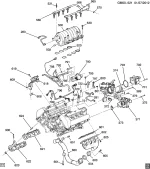
Again as this is 2nd post, check the Cadillac DTS forum as they have more experience on the Northstar also have the vehicle scanned for codes both active and stored. #238 is the PCV hose and assume it's inside the intake manifold, beyond that I have no additional information.
292352.webp
Joseph napier
My fuel pump relay has burnt out twice in less then a week. What could be causing it to do that?
Replace the fuse block
TRIFECTA
Authorized Vendor
Last reply · posted in 2018+ Buick Regal Sportback and TourX Forum
Post up those amazing TourX wagons!

PXL_20210721_010822297_TF.webp
33 Replies · 3443 views
W
Not the best picture but rarely do I find another TourX to park next to for a photo.
K
What wheels are those? They look sick!
MonZZZ17
Perfect parking placement!
original_c96aff89-f490-4853-a3c7-528c46cd3dab_PXL_20240605_160033817.webp
B
Not the best picture but rarely do I find another TourX to park next to for a photo.
Quite surprising to see another red TourX when I left the restaurant.
  • Like
Reactions: D2R and Stovetop
Chef jpd
Installed Thule areobars and a motion 3 XL low box in titan grey.
I'm officially sporty.
Pics to follow
Cabby033
· posted in Buick Verano Forum (Excelle)
Replaced 2.4 engine 2014 verano having an air lock issue. Runs for 20 min fine then temp gage goes up and down. Appears air is trapped in the system. Any help ? Thanks
0 Replies · 117 views

Back
Top