That's Fantastic!
From Auto Bild leading German automobile magazine.
Instrument clusters - the future from the past... (Google Translation)
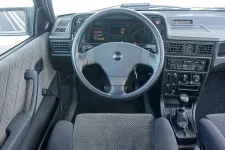
In the case of the Opel Kadett, the digital displays were reserved for the 156 HP GSi. In the sports compact presented in 1983, apart from the speed, the electronic display also showed the engine speed, fuel, and oil levels. Digital displays were also installed in Monza and Senator B.
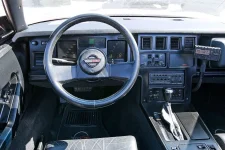
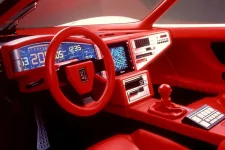
The Chevrolet Corvette C4 not only came from the same company (GM) but was also presented in the same year. The display was also very similar, but the American preferences were more colorful.
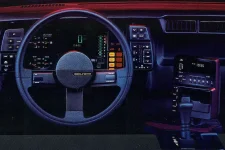
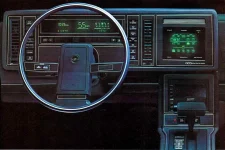
In 1984-86 Chevrolet also offered one of the Camaro Berlinetta variants equipped with digital gauges. The car's slogan was "the digital Camaro" or "Starship Camaro". Indeed, the cockpit looks like a movie spaceship.

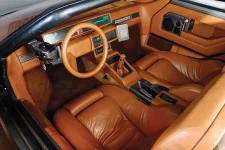
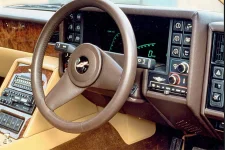
From 1983, Audi also focused on electronics in the Quattro. The most important information for the driver was displayed on three separate clocks. However, analog gauges were used in the legendary Quattro S1 B-group racing cars.
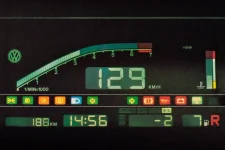
From 1986, Golf drivers were also able to have digital gauges on board. Volkswagen Digifiz (short for Digitales Fahrer-Informations-Zentrum - driver's digital information center) was optionally available for the GTi variant. The curiosity of this solution: despite the electronic display, the car's mileage was displayed up to 299,999 km. At 300 thousand. km, just dashes appeared on the gauge. Due to the low demand years ago, today the VW Digifiz display is one of the most sought-after Golf parts.
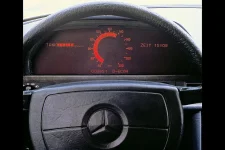
The Mercedes Auto 2000 studio, based on the S-class W126, was shown in 1981 and was to present the directions in which the automotive industry would go at the turn of the century. So the electronic display fit like a glove - at least then it seemed to Mercedes. On the screen, you could also see the indications of the fledgling navigation.
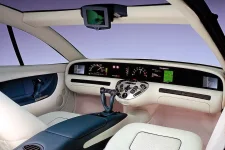
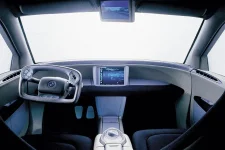
A few steps further, Mercedes-Benz F200 went with the F200 Imagination, which was shown in 1996. The display stretched across the entire width of the dashboard and resembles the systems used by Mercedes today. Controlling the car with a joystick.
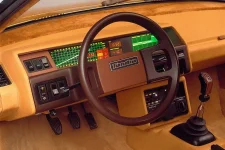
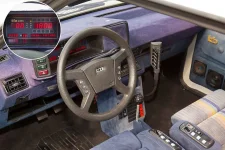
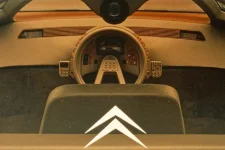
The Volvo Tundra shows what the future looked like in 1979, according to the Swedish company. The concept car designed by Bertone turned out to be too futuristic. Therefore, the studio finally sold the slightly changed design to Citroen. The French used it for the BX model.

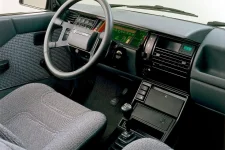
With the Citroen BX, the digital cockpit appeared in 1985 in the Digit special version. The middle display shows the speed and there is an
armada of colored lights to the left and right. The switches on both sides of the clocks, replacing the levers under the steering wheel, look futuristic and were used in all BXs.