• This section is for help and assistance with 2018 and NEWER Buick Regals. If you need assistance with a 2011-2017 Buick Regal, CLICK HERE. If you need assistance with a 2010 or older Buick Regal, CLICK HERE. This notice may be dismissed by clicking the X in the right corner.
  • Car enthusiast? Join us on Cars Connected! iOS | Android | Desktop

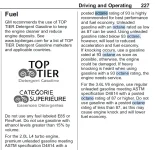
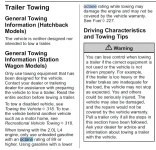
Premium vs Regular Fuel

Herts shows Regal, Malibu, Camaro, CTS Caddy, all with the 2.0L turbo engines.


View attachment 36482View attachment 36484
Go find one! Hertz sales has 6 Malibu Premiers for sale with the 2.0T. And over 2,000 LT trims with the 1.5. No Regals. And like I said, I've never seen one in about 10 different states.
 
Go find one! Hertz sales has 6 Malibu Premiers for sale with the 2.0T. And over 2,000 LT trims with the 1.5. No Regals. And like I said, I've never seen one in ....

You probably had to reserve one to get one, if I rented something I would want the 2.0 T.
No doubt they go faster and get picked faster.
 
Last edited:
Go find one! Hertz sales has 6 Malibu Premiers for sale with the 2.0T. And over 2,000 LT trims with the 1.5. No Regals. And like I said, I've never seen one in about 10 different states.
Since the Regal is a legacy vehicle I’d guess they’ve been sold off a while ago. But The 2.0T is used in a bunch of GM cars and SUVs that are in listed rental fleets, it’s not just Malibu and Regal. I’ll take it as a good gamble that if putting regular gas in them would grenade the engine the rental companies would think twice before using those cars and SUVs.
 
______________________________

Help support this site so it can continue supporting you!
Since the Regal is a legacy vehicle I’d guess they’ve been sold off a while ago. But The 2.0T is used in a bunch of GM cars and SUVs that are in listed rental fleets, it’s not just Malibu and Regal. I’ll take it as a good gamble that if putting regular gas in them would grenade the engine the rental companies would think twice before using those cars and SUVs.
New 2.0 LSY engines run on regular. LTG was not very popular. It was used primarily by Cadillacs, GMC Acadia, top trim Equinox and Terrain. Rental companies don't keep an old fleet, they usually sell their cars before they hit 50,000 miles. My guess most modern engines will run 50k, even when abused. As owners we are definitely more interested in keeping our cars running as long as we can (or as long as we own it). 80,000 miles on my Regal and it runs as good as new.
 
My point was not that regular kills this engine, but rather that ther IS a difference wheb running it. I see the computer pulling ignition timing in greater amounts, and more often, with a belly full of regular vs premium. This absolutely will mean less power, and lower economy. Whether either is enough to be perceptible, I can't say for every situation. But I do know that over 4 degrees of knock retard scares me, as that means the computer is intervening HARD in order to avoid engine damage. I'd prefer to stay out of that situation entirely.
 
My point was not that regular kills this engine, but rather that ther IS a difference wheb running it. I see the computer pulling ignition timing in greater amounts, and more often, with a belly full of regular vs premium. This absolutely will mean less power, and lower economy. Whether either is enough to be perceptible, I can't say for every situation. But I do know that over 4 degrees of knock retard scares me, as that means the computer is intervening HARD in order to avoid engine damage. I'd prefer to stay out of that situation entirely.
I can't dispute or confirm your numbers as I don't have the hardware to measure it on mine. Taking it at face value it would indicate the computer is doing what it is designed to do.

All I will say is what I have said before, in my experience using both grades of gas over 48K miles I have not seen a real world reduction in mileage or acceleration in everyday driving situations using 87 vs 93 octane. Probably I just don't drive the car hard enough to where it would be noticeable whereas others do.
 
I guess you could compare it to us eating hamburger or steak, when its all digested it goes out the tailpipe pretty much the same. Except the burger eaters have some cash left.
 
______________________________

Help support this site so it can continue supporting you!
@Jmlo96 what OBD2 reader are you using with Torque app? Will that also provide throttle position data? Lastly, are these included in the free version of Torque? TIA.

Probably I just don't drive the car hard enough to where it would be noticeable whereas others do.

Good point. I think this statement is key.

I'd venture to say most people who say they don't feel difference:
- simply aren't pushing their car hard enough to reek the (small) benefits.
- they filled up with 93 with a tank half loaded with 87. Sometimes the difference is only evident until 2+ tankfuls when I switch back and forth.
- I guess it's also safe to say some people simply won't feel the difference as their ass dyno might not be sensitive enough. (@saab93driver - Not that I know anything about your ass dyno 😀.... but judging by your contributions here, I don't think you fall under this classification). Using 93 doesn't instantly make your car feel like a Maserati.

I personally DO feel a difference in power using 93 but it's primarily under WOT. Around town, normal driving power gain is negligible, if any. However, I have not experienced gas mileage gains like others have reported.
 
  • Like
Reactions: D2R
I am pretty sure people think their car runs better on premium even if it doesn't. Do not discount the power of positive thinking, or the placebo effect.
 
The manual calls for premium fuel, which is ridiculously priced, so I explored this option.

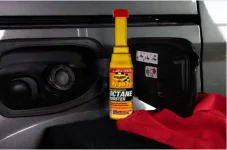
I have a friend who has a BMW 530i, fills the tank with regular gas, and adds a bottle of Fuel Octane Booster (each bottle will treat up to 20 US gallons which is about 75 Liters.). Using the Octane Booster is also cheaper than buying high octane gas at the pump with a 20-gallon gas tank. Filling up with premium gas would cost him approximately 20 dollars more per fill-up. No more knocking, pinging, or performance decline. Fill up with 89 then it turns it into 91 octane fuel. Raising it 2 full points. Looking at the price of this octane booster makes this a no-brainer. Works With All Unleaded Gasoline, Ethanol E10 E15 E85, and Racing Fuel. Great value & keeps the car healthy.

1647464109741.webp

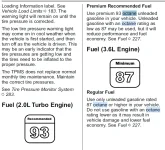
Premium fuel recommended list

Why Most Cars Can Run Low-Octane Fuel

The way engineers help you avoid pings and knocks is by using an octane sensor. This sensor detects the type of fuel you’re running and retards the spark timing in your engine so there’s little to no risk of detonation if fuel might be less stable than recommended.

The presence of this sensor in most cars built later than 1996 means that, if your car was built later than that year, you can run regular fuel without much fear of damage to your engine. The only possible exception would be that under heavy load, for example, and while pulling up a steep hill, you might still experience detonation, but mild detonation is not as detrimental as a full-blown knock.

The Downsides of Using Regular Gas in Your Regal

Filling up your Regal, or any other car, with premium gas can hurt your wallet. Depending on your Regal model, you can technically save money by using regular fuel, but it will come at a cost. Enjoying those savings now isn’t worth risking damage to your vehicle.

Most modern cars can run on regular gas, thanks to more electronic components, but this can place stress on parts including electronic knock sensors in your engine. These electronic components allow the engine to detect the type of gas it’s running on and adjust performance accordingly, avoiding damage to your engine.

Another downside of using regular fuel is that because it adjusts your engine’s performance, you’ll lose some of your car’s power and experience slower acceleration rates. This isn’t a huge loss, though. Most cars that are recommended to use premium but switch to regular gas will lose in the neighborhood of 10HP.
 
@Jmlo96 what OBD2 reader are you using with Torque app? Will that also provide throttle position data? Lastly, are these included in the free version of Torque? TIA.
Some cheapie Amazon OBD2 dongle. Was like $9 many years ago. It does do throttle position stuff, but is annoyingly slow. Supposed to log at 10 Hz, but even with only 3 or 4 PIDs running it updates data every 0.7 sec or so at best. I have the paid version, no sure on the differences.
 
______________________________

Help support this site so it can continue supporting you!
The manual calls for premium fuel, which is ridiculously priced, so I explored this option.

I have a friend who has a BMW 530i, fills the tank with regular gas, and adds a bottle of Fuel Octane Booster (each bottle will treat up to 20 US gallons which is about 75 Liters.). Using the Octane Booster is also cheaper than buying high octane gas at the pump with a 20-gallon gas tank. Filling up with premium gas would cost him approximately 20 dollars more per fill-up. No more knocking, pinging, or performance decline. Fill up with 89 then it turns it into 91 octane fuel. Raising it 2 full points. Looking at the price of this octane booster makes this a no-brainer. Works With All Unleaded Gasoline, Ethanol E10 E15 E85, and Racing Fuel. Great value & keeps the car healthy.

View attachment 36497

Premium fuel recommended list

Why Most Cars Can Run Low-Octane Fuel

The way engineers help you avoid pings and knocks is by using an octane sensor. This sensor detects the type of fuel you’re running and retards the spark timing in your engine so there’s little to no risk of detonation if fuel might be less stable than recommended.

The presence of this sensor in most cars built later than 1996 means that, if your car was built later than that year, you can run regular fuel without much fear of damage to your engine. The only possible exception would be that under heavy load, for example, and while pulling up a steep hill, you might still experience detonation, but mild detonation is not as detrimental as a full-blown knock.

The Downsides of Using Regular Gas in Your Regal

Filling up your Regal, or any other car, with premium gas can hurt your wallet. Depending on your Regal model, you can technically save money by using regular fuel, but it will come at a cost. Enjoying those savings now isn’t worth risking damage to your vehicle.

Most modern cars can run on regular gas, thanks to more electronic components, but this can place stress on parts including electronic knock sensors in your engine. These electronic components allow the engine to detect the type of gas it’s running on and adjust performance accordingly, avoiding damage to your engine.

Another downside of using regular fuel is that because it adjusts your engine’s performance, you’ll lose some of your car’s power and experience slower acceleration rates. This isn’t a huge loss, though. Most cars that are recommended to use premium but switch to regular gas will lose in the neighborhood of 10HP.

Octane booster is sort of shady. "2 octane points" means 0.2 boost (R+M)/2. Most use toluene as the main component, which on it's own is about 116 octane. But you need a fair amount to get a boost, not ounces. I used to have a couple 5 gallon jugs that I'd mix about 20% in a heavily modified YZ250 I had. For example, to get 10 gallons of 91 octane would require about 8.5 gallons of 87 and 1.5 gallons of toluene.

And, an octane sensor? There is no such thing. Ethanol sensor is a thing. As is a knock sensor with monitors the engine for detonation, allowing the ECM software strategy to intervene if low octane fuel is used and the engine is trying to destroy itself. But there is no octane sensor, short of running labratory tests with a test engine.
 
Some cheapie Amazon OBD2 dongle. Was like $9 many years ago. It does do throttle position stuff, but is annoyingly slow. Supposed to log at 10 Hz, but even with only 3 or 4 PIDs running it updates data every 0.7 sec or so at best. I have the paid version, no sure on the differences.
Methylcyclopentadienyl manganese tricarbonyl (MMT or MCMT) was initially marketed as a supplement for use in leaded gasoline, MMT was later used in unleaded gasoline to increase the octane rating. Many manufacturers recommend against the use of MMT in their vehicles, while others specifically prohibit its use.

2011 Chevrolet malibu owners
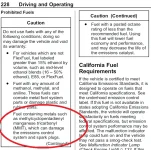
"Some gasolines that are not reformulated for low emissions can contain an octane-enhancing additive called methylcyclopentadienyl manganese tricarbonyl (MMT); ask the attendant where you buy gasoline whether the fuel contains MMT. We recommend against the use of such gasolines. Fuels containing MMT can reduce spark plug life and affect emission control system performance. The malfunction indicator lamp might turn on. If this occurs, return to your dealer for service."


Rislone Contains the highest concentrate of MMT Methylcyclopentadienyl Manganese Tricarbonyl allowed for street use
 
Methylcyclopentadienyl manganese tricarbonyl (MMT or MCMT) was initially marketed as a supplement for use in leaded gasoline, MMT was later used in unleaded gasoline to increase the octane rating. Many manufacturers recommend against the use of MMT in their vehicles, while others specifically prohibit its use.

2011 Chevrolet malibu owners
"Some gasolines that are not reformulated for low emissions can contain an octane-enhancing additive called methylcyclopentadienyl manganese tricarbonyl (MMT); ask the attendant where you buy gasoline whether the fuel contains MMT. We recommend against the use of such gasolines. Fuels containing MMT can reduce spark plug life and affect emission control system performance. The malfunction indicator lamp might turn on. If this occurs, return to your dealer for service."


Rislone Contains the highest concentrate of MMT Methylcyclopentadienyl Manganese Tricarbonyl allowed for street use
MMT is not really good stuff. Most every manufacturer recommends against it. Including Buick. From my manual :
TourX-MMT-screenshot.webp


A decent read without needing an SAE subscription for their papers :
Impact Assessment of Metal-Based Octane Boosters: A Literature Review

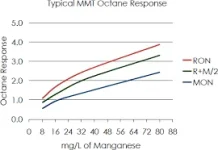
EPA limits it to 8.3 mg/L, as it is great at clogging catalytic convertors. You need about 3X that concentration to get a 2 point octane boost.
MMTvsOctaneEstimate.webp

I just went to the gas station and filled up the CBR.
87 octane is $4.08/gal
89 octane is $4.38/gal
93 octane is $4.68/gal

So -
87 plus a $3.58 bottle of Rislone means $85.18 for 20 gallons of potentially catalyst clogging 89 octane.
or
89 octane from the pump for $87.60 for 20 gallons.
or
93 octane from the pump for $93.60 for 20 gallons.

I can understand not wanting to spring for premium, or even midgrade. But I would not potentially clog a cat (which KILLS performance) to save a measly 2.8% by homebrewing 89 octane.
 
Guessing that manual is from a19 or 20 model.
 
Go find one! Hertz sales has 6 Malibu Premiers for sale with the 2.0T. And over 2,000 LT trims with the 1.5. No Regals. And like I said, I've never seen one in about 10 different states.
Actually in January I rented a Regal Sportback from Hertz to go from Clearwater to Orlando and back twice over a weekend. However saying that, now upon reflection I don't think it had the 2.0T. I do know that when I put my foot into it the thing moved its a$$ hard, quicker than my 2016 Regal Turbo.

And since I have your attention a question if you don't mind. I'm thinking of getting the Trifecata Performance upgrade for my 2018 TourX Essence, thoughts?

I'm almost convinced to get it, I've been asking around but would like some more opinions.

Thanks.
 
Back
Top